Like any physically hard-working team, we had to manage a supply of food. Rice was very important for the local team, and we had to calculate 1 kg rice per person per day. Palawan rice is the best in the Philippines!
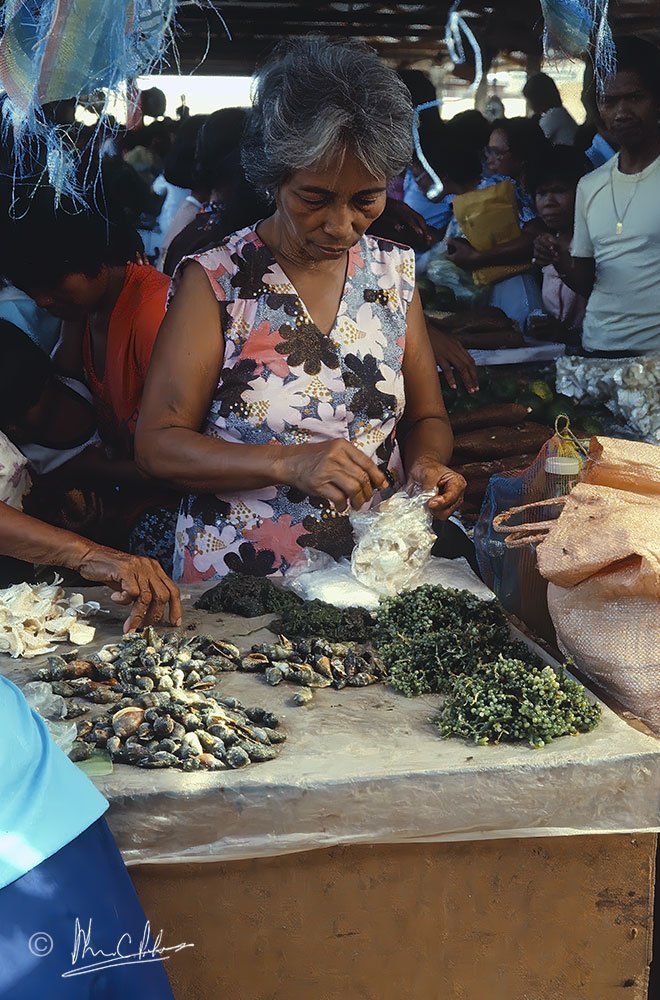
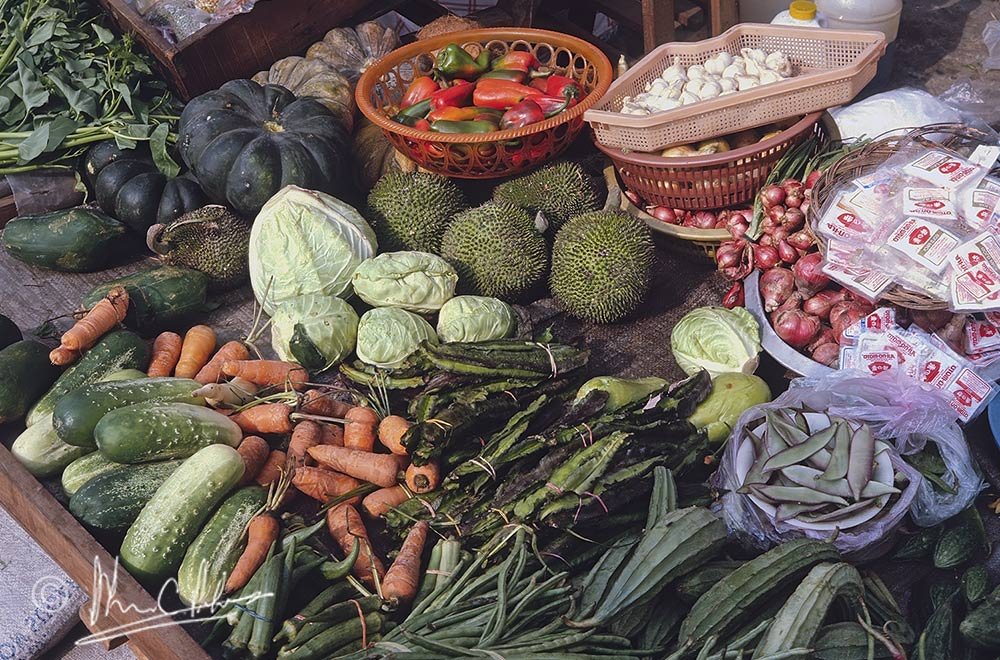
Fruit and vegetables could be purchased at the local market, but the experience of our cook was needed to know how long each type could be kept. Below you can see pumpkin, paprika, garlic, cabbage, breadnut, scallion, winged beans, carrot, green papaya, luffa, soya beans, and okra.
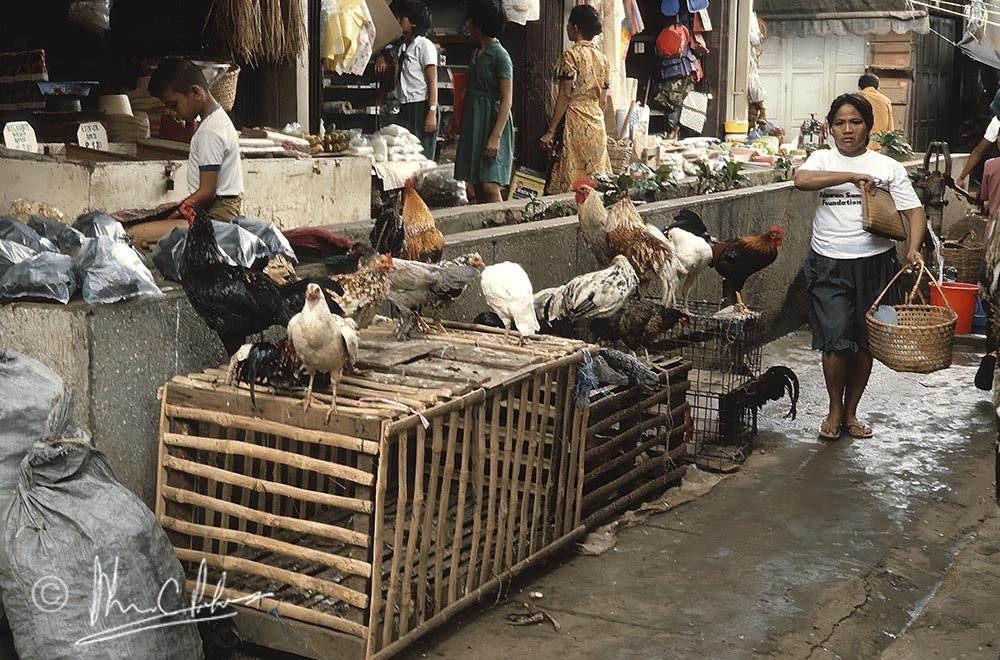
Dried, salted fish was a frequent protein source. Fresh meat was always in the form of chickens that we took with us into the forest. There was nothing we could reliably collect to eat in the forest.
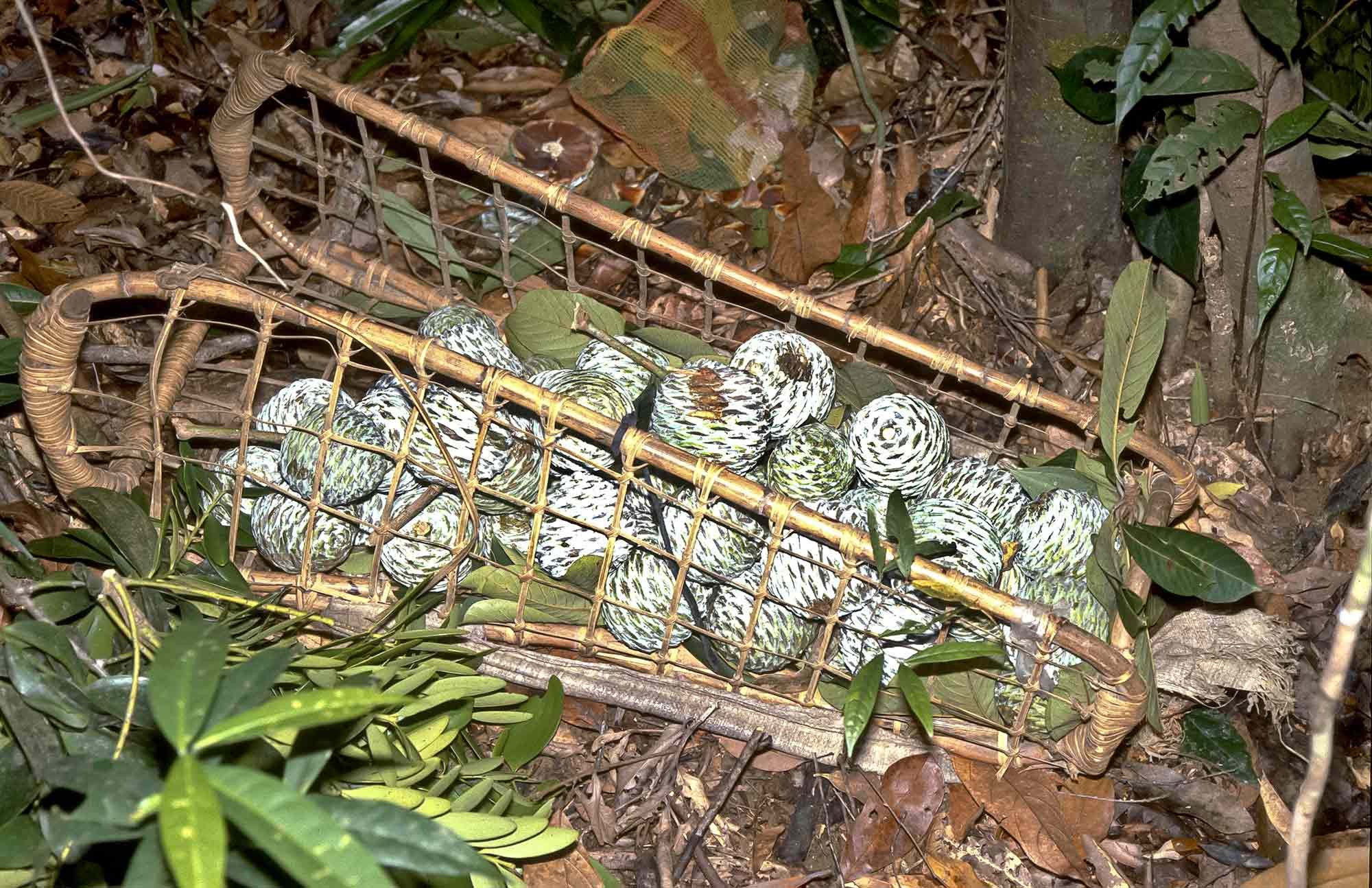
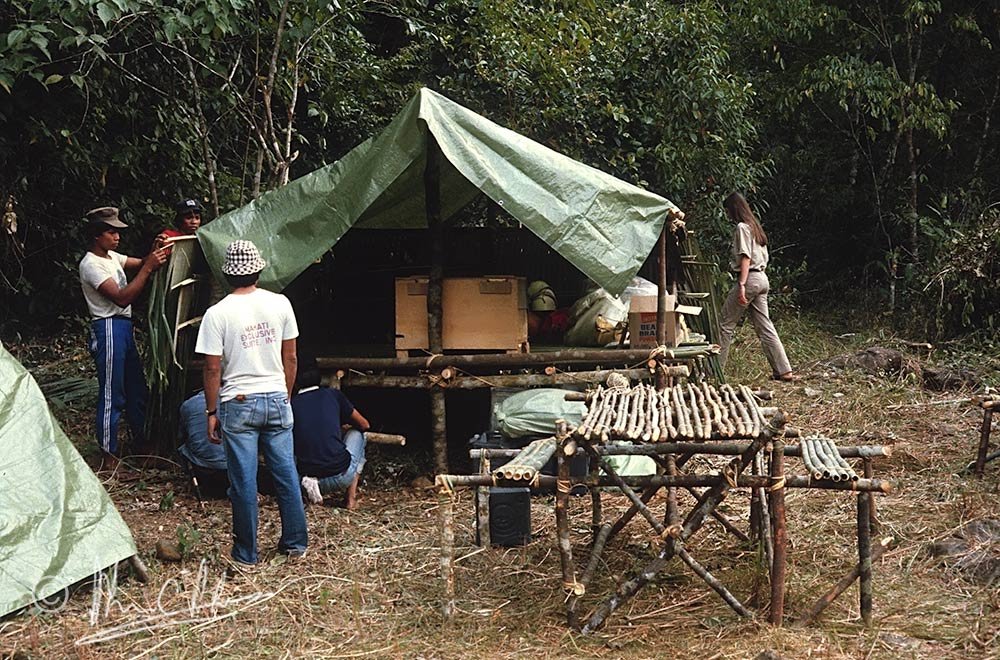
The local almaciga gatherer shelters were the basis for everything we needed constructed for a base camp.
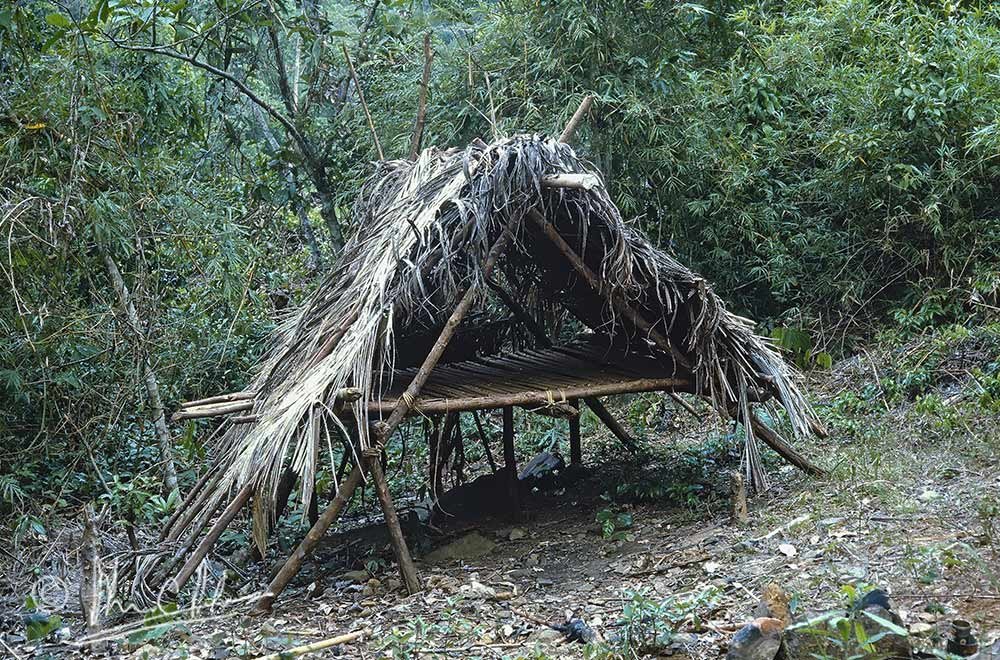
The main frames of the the shelters and tables were made from the trunks of small trees.
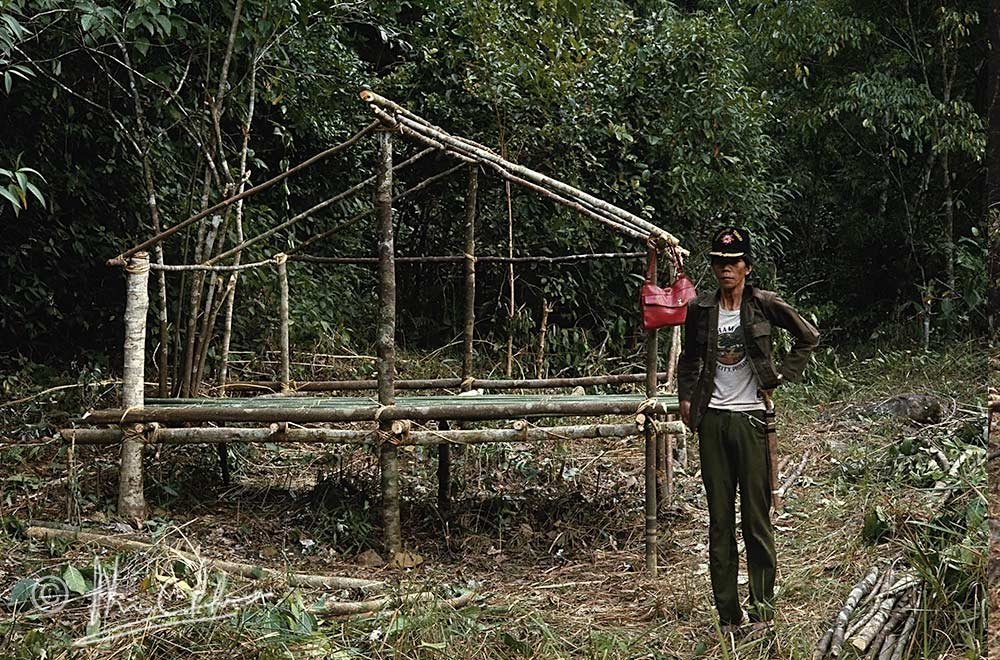
Split bamboo or rattan was used to tie the supports together. Sleeping areas were made of thin bamboo as it was supple and gave a little when you lay on it.
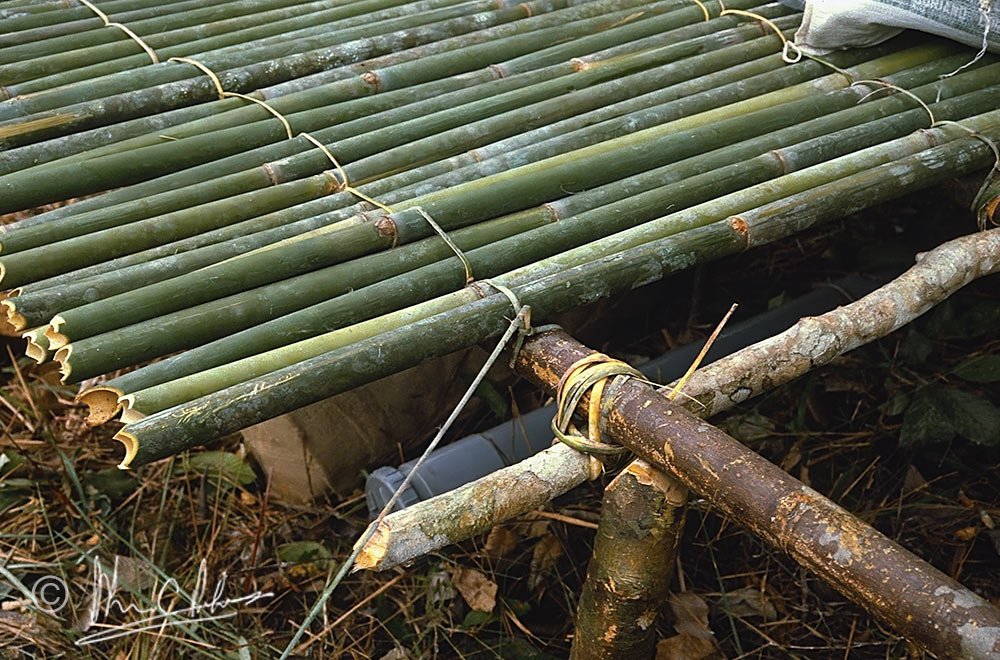
To make it less hard, woven pandas mats (far better than mats palm leaf) bought in the Puerto Princessa market, were laid over the bamboo. We once had the luxury of a woven bamboo mat made by the tree climbers as a bed.
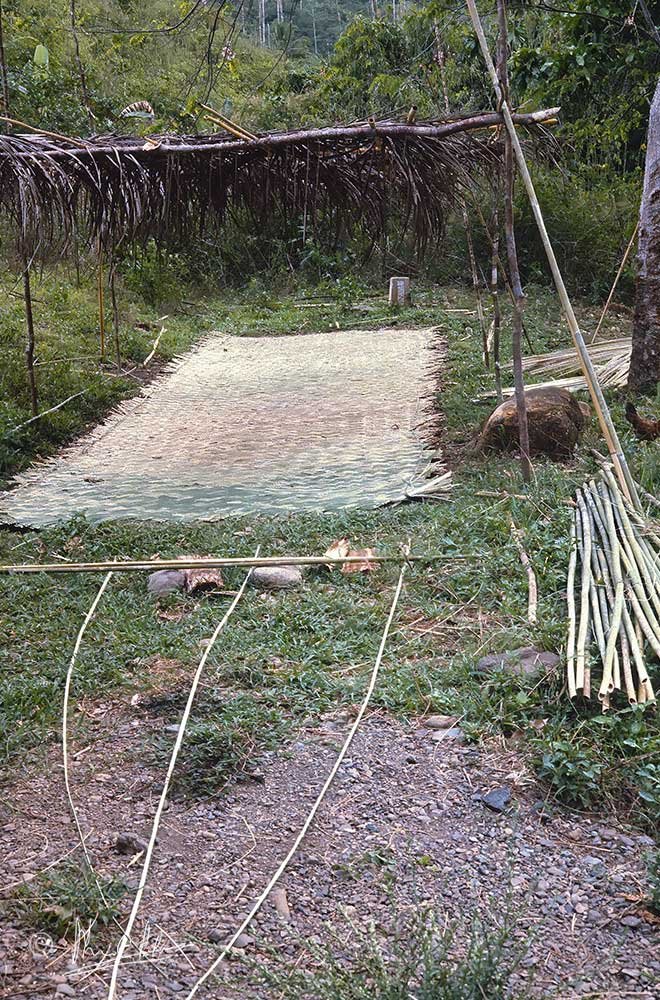 Table and bench surfaces were made of very small diameter straight poles laid together and bound to the table frame.
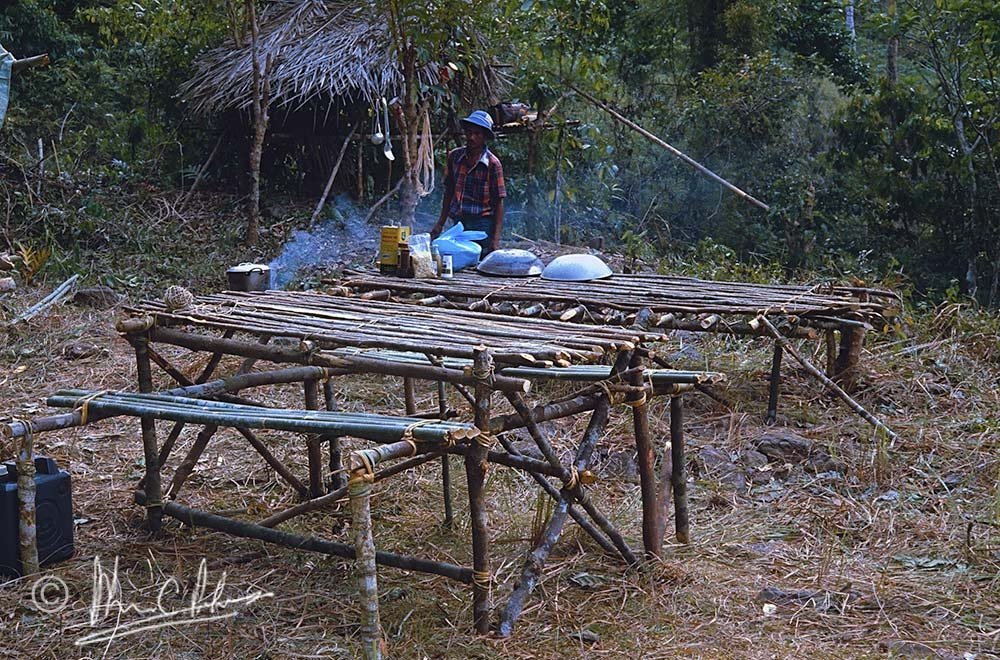
Tough but light-weight tarpaulins were used for roofing and palm shingle for the the sides.
In the Iranian River Valley we had good clean water to drink and pools under waterfalls to wash. In other areas we were not so lucky. Water was always sterilised with special silver tablets and often boiled. The danger of catching waterborne parasites and bacteria was high.
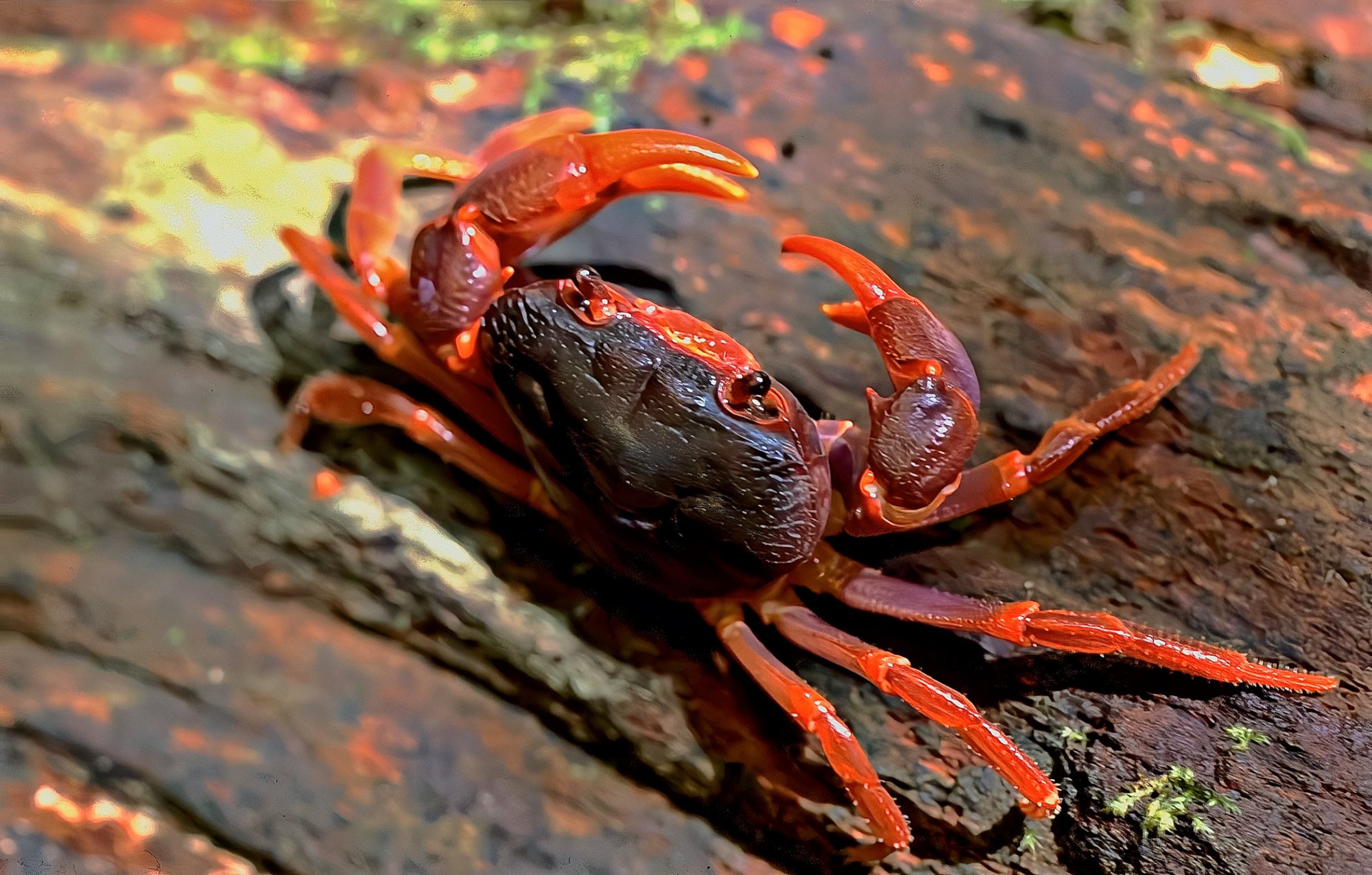
Great care had to be taken walking through camp due to large poisonous centipedes. In the forest, leeches were common. Spraying our clothes with insect spray seemed to keep them away.
With so many people, we could justify having a full-time cook. Julio was a master at conjuring up meals from out supplies. Caramelised bananas often awaited us when we came back from the forest. Fresh fish provided an occasional variation to the diet. When we were in the forest, we also carried emergency food packs and a spirit cooker in case we couldn't return to base camp.
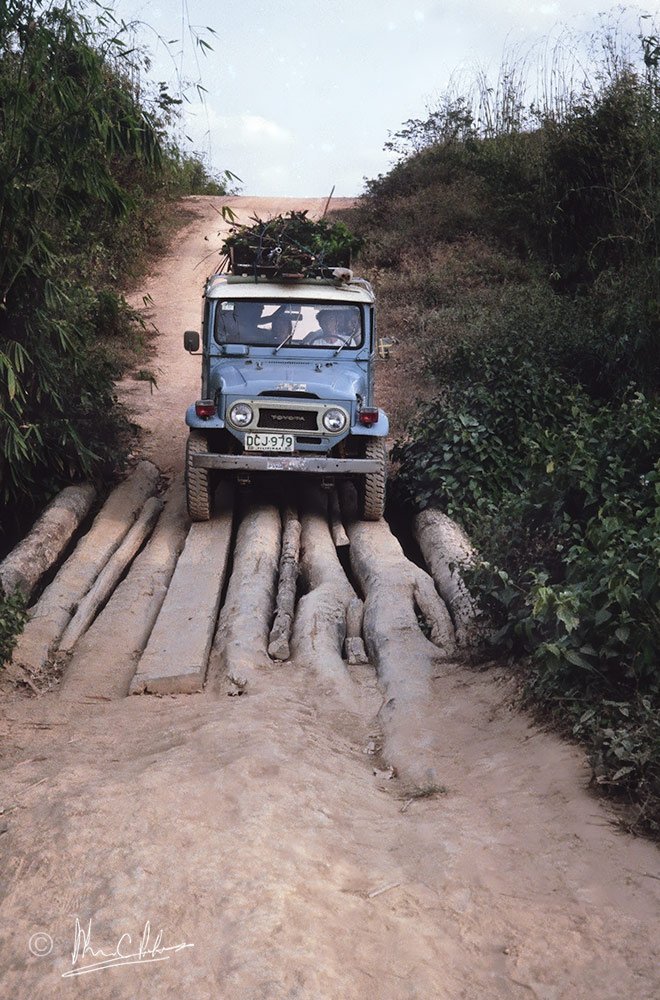 The good roads at the time were sand on soil, with bridges made from logs laid over the streams. In some areas there was laterite and when wet, the 4-wheeler would often start sliding to the side of the road and drop-off. That was on occasion very nerve-racking.