Langen (Malapakan) Island
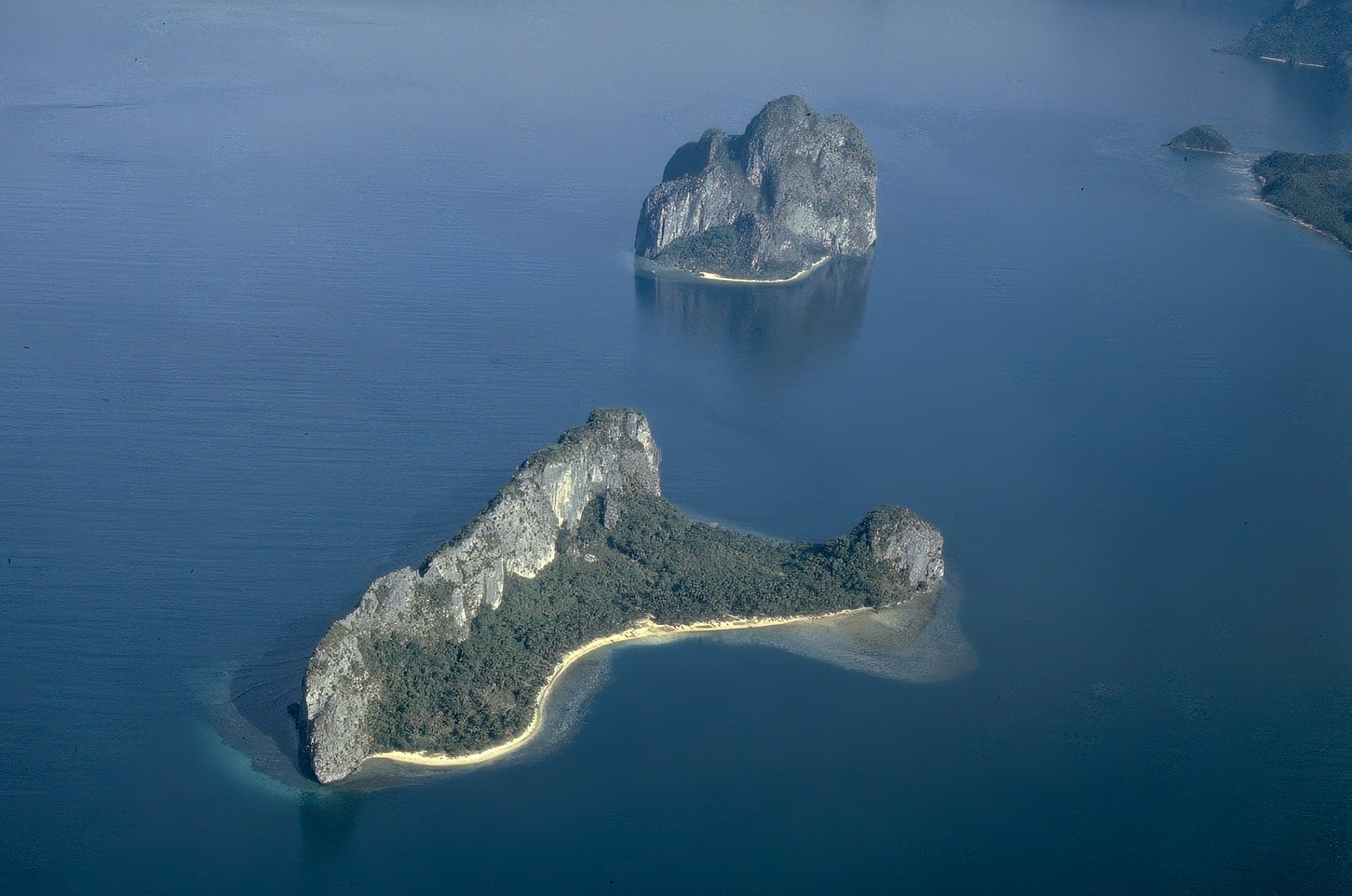
The sheer limestone cliffs of this karst limestone island towered vertically from the sea to 300 m . Except in the bays, the terrain is rugged with pinnacles, crevasses, sinkholes, and was covered in algae. Surface water was absent. Leaf litter accumulations were seen in limestone pockets. The roots often travelled for several meters over rock surfaces before locating a route into the ground. In spite of such apparent difficulties, very well developed forest was found directly on the coast and on the karst slopes. A stunted forest was found on the karst summits. Coconut and betel nut plantations now grow on most land near sea level around the bays. Coastal forest and mangroves (with Aegiceras, Bruguieria, Rhizophora and Sonneratia) probably grew in these areas originally. The total extent of this vegetation type was probably about five hectares on the whole island.
Coastal forest
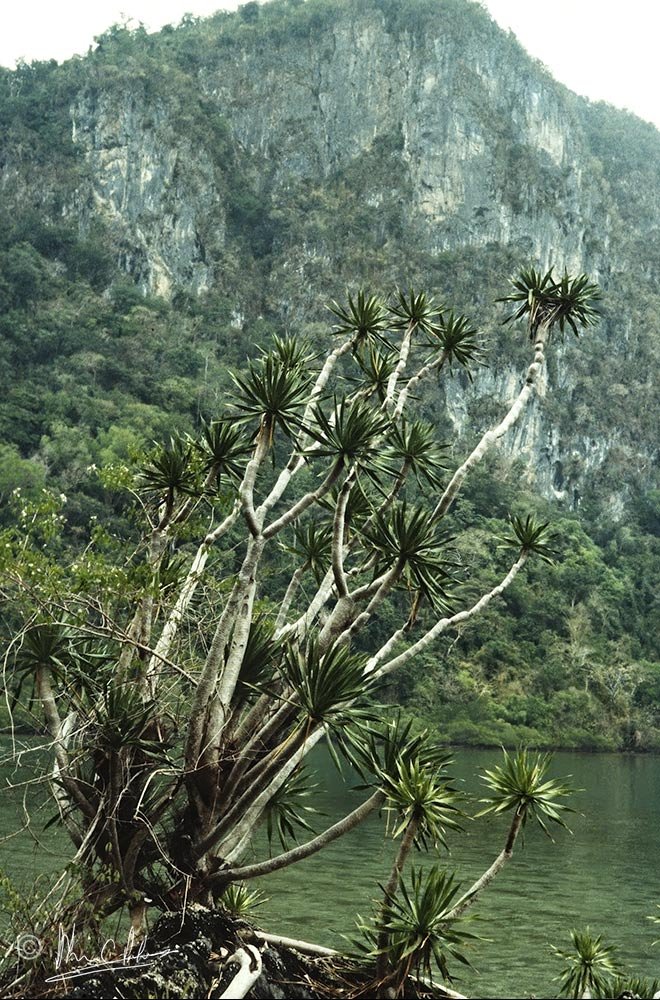
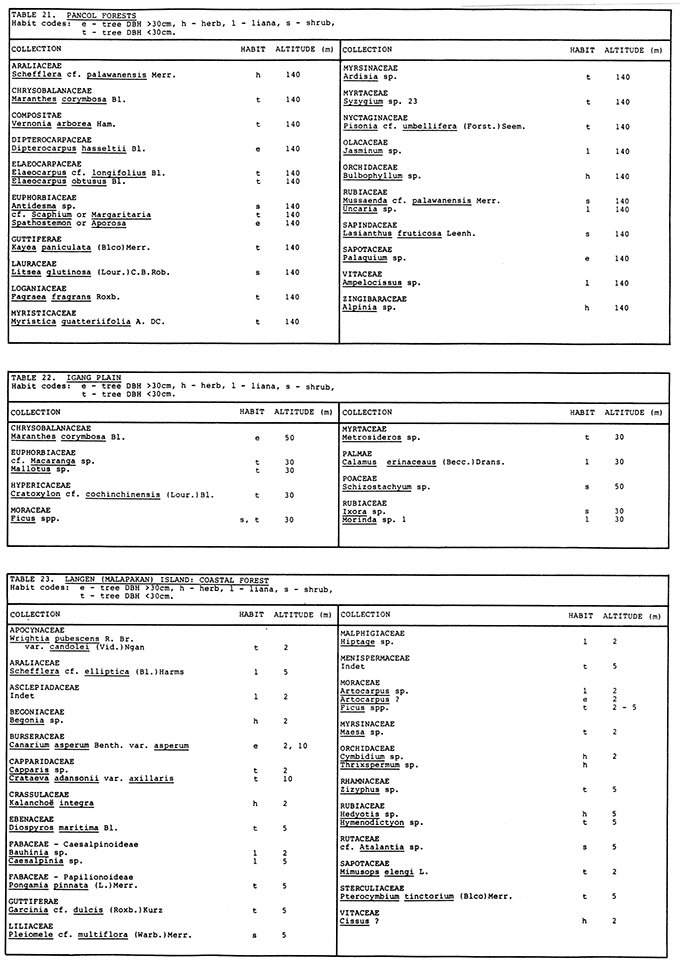
Canarium asperum var. asperum and Artocarpus grew to a large size in the coastal strip (fig. 13, locality 23). Some of the trees growing on limestone blocks in direct contact with the sea were several Ficus species, Hymenodictyon. And Pterocymbium tinctorium. Perhaps most characteristic was Pleiomele cf. multiflora which formed branched clumps of substantial size. This species grew only on exposed cliff faces, but occurred up to 300 m. The limestone community in the wave zone consisted of a fleshy Begonia sp., Kalanchoe integra, Cymbidium sp., Ficus drupacea, F. microcarpa, F. microcarpa, F. variegata and, in shaded areas, a Peperomia sp. The liana Crataeva dansonii ssp. adansonii var. axillaris was a rare find. Further details are given in table 23.
Karst slope forest
With at least sixteen emergent species, this forest (fig 13, localities 24, 25; table 24) was very well developed. At lower altitudes Buchanania arborescens, Ardisia sp., Syzygium sp. 11, Palaquium dubardii and Pisonia sp. were the major large trees, and Ficus punctata, F. septica were found in the understory. Higher on the slope Pterocarpus indicus, Intsia bijuga and Cynometra ramiflora were important emergents while in the saddle (fig. 13, locality 25) a new species of Heritiera was the dominant emergent.
Karst outcrop summits
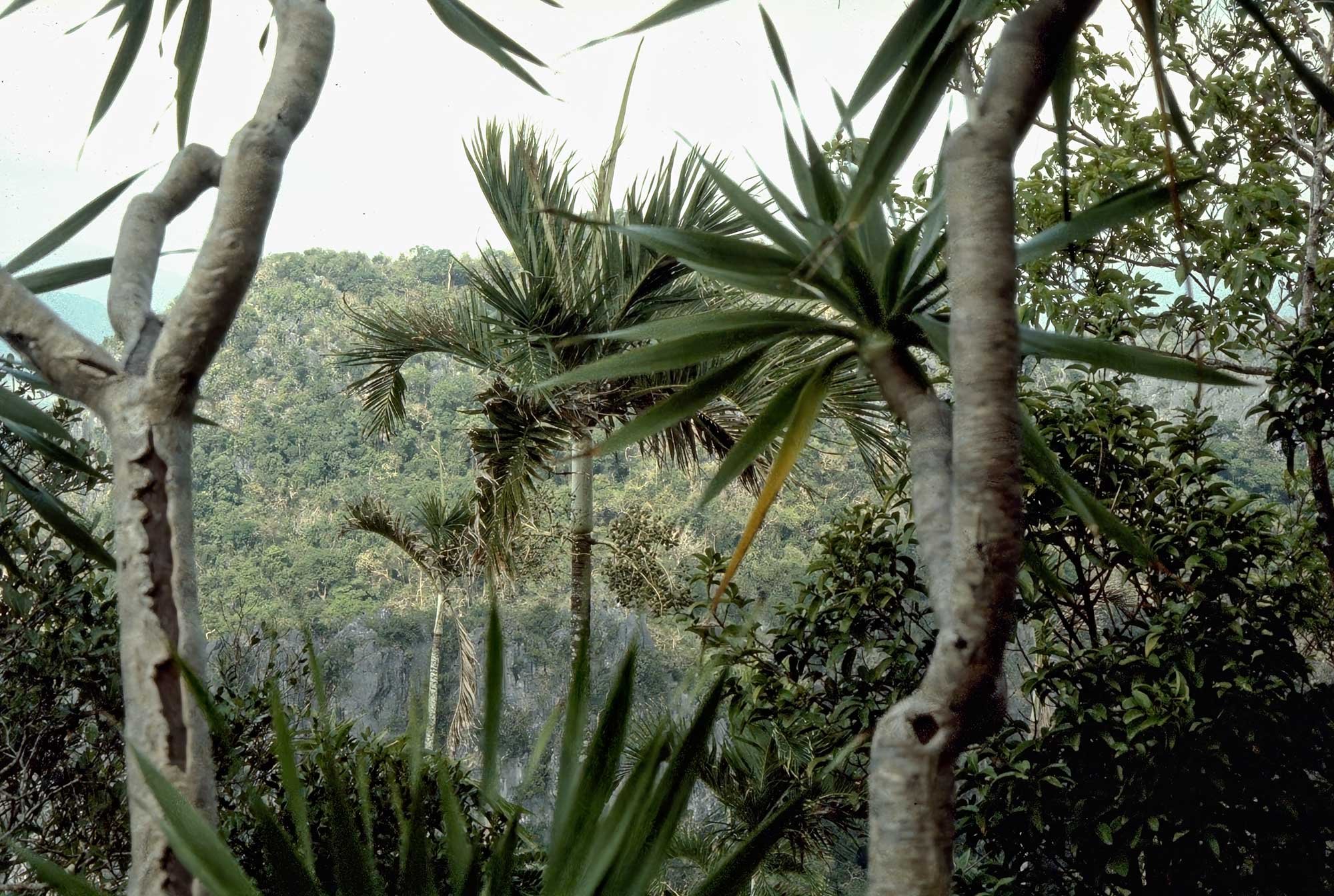
Two habitats were observed on the outcrop visited (fig. 13,locality 22). In one the surface was fairly level with some soil accumulation, while the other consisted of eroded karst limestone blocks. A dense forest with many shrubs and short (c. 7 - 10 m) but wide diameter trees e.g. Ochrosia glomerata, Tarrenoidea sp. and Palaquium dubardii. of note amongst the narrower diameter trees were Schefflera cf. palawanensis (an endemic), Spondias acida and the same species of Calophyllum as occurred at low altitude in the Irawan R. valley. Further details are given in table 25.
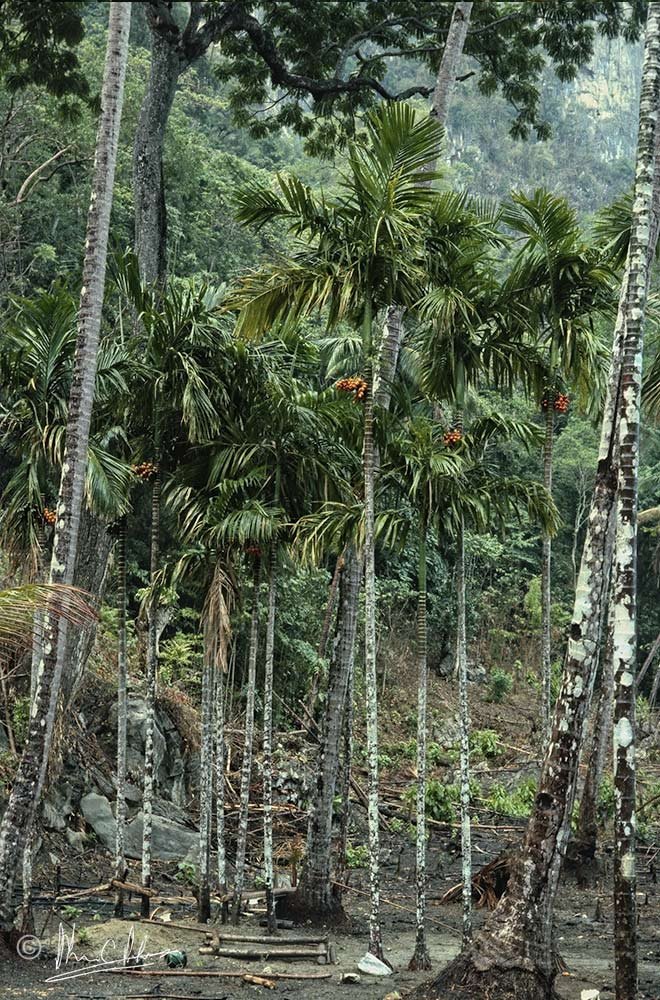
The deciduous Sterculia sp. and Cratoxylon cochinchinensis were dominant on the limestone blocks. A massive Bauhinia sp. grew over the rocks as a liana and together with a Jasminum sp., formed dense thickets. Ficus benjamina. Euphorbia trigona and the palm Veitchia merrillii also grew in some numbers directly on the limestone blocks. Veitchia merrillii, a horticulturally important palm worldwide, is found only on the islands of Bacuit Bay, where it is common along cliff-tops and on pinnacle faces. An isolated colony of very large Livistona rotundifolia was seen on the ledges of an inaccessible pinnacle in the west of the island and another on the southernmost karst peak.