GENETIC RESOURCES
The minimum estimate for those plants with known uses plus those closely related to plants with known uses is forty-three percent of the collected species. Eight percent of these are timber producing species, fifteen percent produce both food and wood and seventy-seven provide food, cane, gums or resins. These very high figures clearly demonstrate the great genetic resource represented by the flora of Palawan.
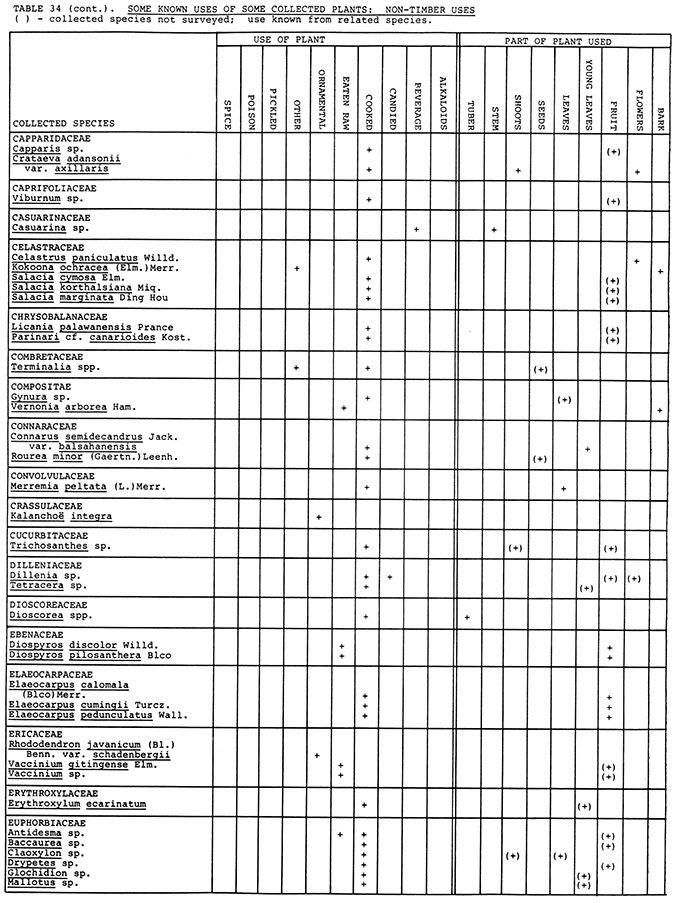
Details of the wood producing species, their properties and use are given in table 33. Those for the species providing food, cane, gum etc. are given in table 34. These data are in no way intended to be exhaustive, but serve as a guide-line illustrating the known and probable potential of the genetic resources sampled by the collections.
A few key references (Aday 1971; Dransfield 1979; Kunkel 1984; Mediado et al. 1973; Sudo 1983?; Whitford 1911) were consulted to compile the data for tables 33 and 34. Data on other types of use such as for medicines, secondary compounds and nectar production for honey for example, have not been consulted. It is certain that considerable further information would be forthcoming if such subjects were studied.
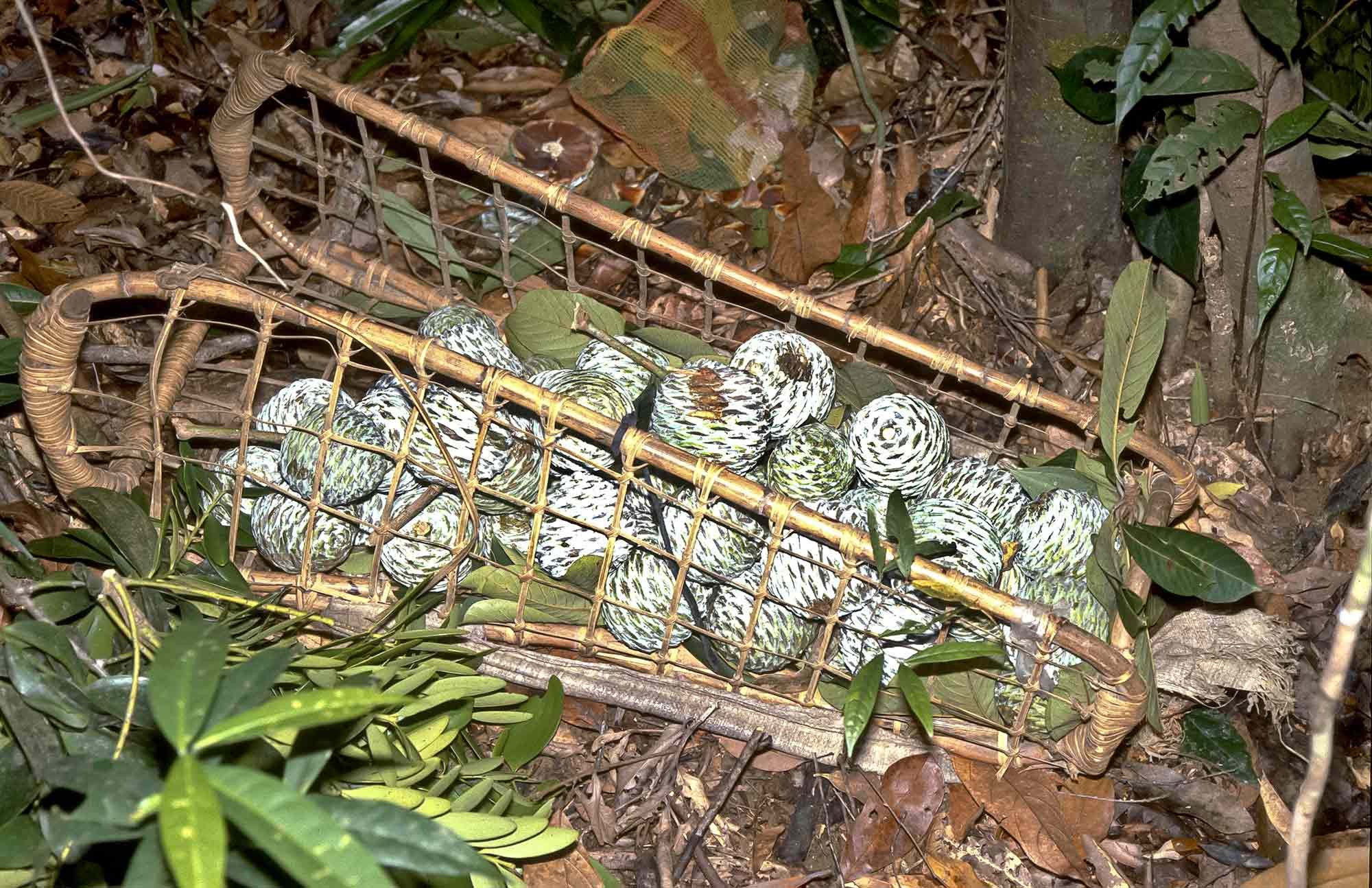
The potential for development of many species is high. Several are already exploited commercially in SE Asia on a non-renewable basis. The market potential for these species is thus already known. Silvicultural data exists for several of the trees or their close relatives. Agathis dammara is a well known high-value timber but is not yet in plantations in the Philippines though much is now known about its vegetative propagation. Terminalia spp. are plantation grown in many countries, vegetative propagation techniques are known and it has been shown that in some species, wood density is under direct genetic control (Gill et al. 1982). Much information about other species can be found in Anon. (1907), Drees (1951), Hellinga (1950), Japing & Seng (1936), Leaky et al. (1982) and von Meyenfeldt et al. (1978).
Rattans are probably the non-timber species of greatest value. Culture techniques for the large diameter cane species of the Philippines however, is poorly known even though their market value is extremely high.
Gnetum, a gymnosperm, is a scarcely utilized species in the Philippines, though relatively common in the Palawan forests. In Indonesia the seeds are used on a large scale to make vegetable crisps, and the young leaves, a very palatable vegetable.
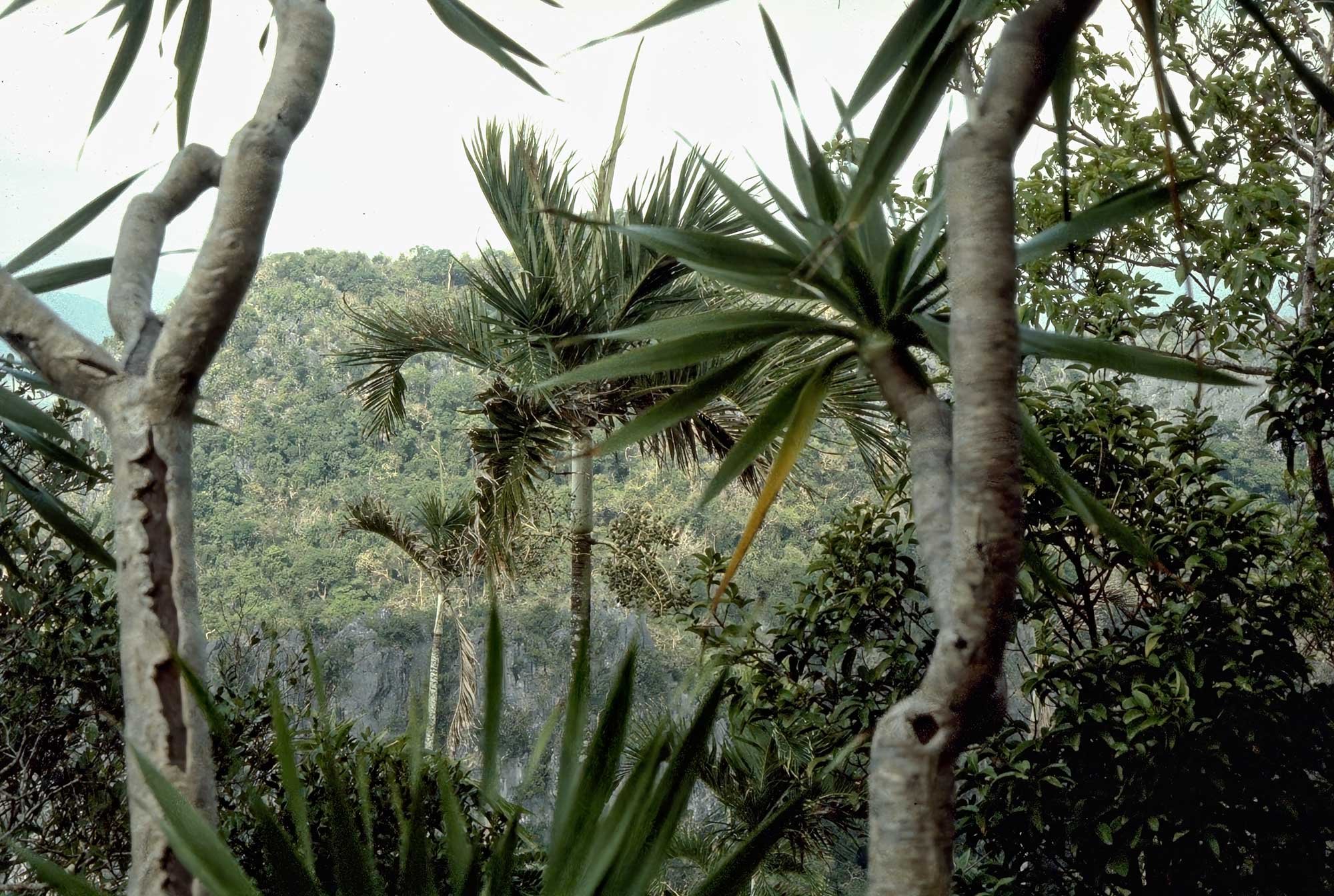
The rich fig-flora, many begonia species, palms and orchids in addition to numerous other plants represent a considerable potential source of ornamentals both for the local and international trade. Several of the big lianas have potential for planting around high-rise buildings. It is clearly evident that not only do the species represented in the collections symbolize a substantial resource for the future, but considerable data already exist to direct their initial development. There is wide scope for problem oriented research. Details on the autecology of development-targeted species would be particularly valuable.
Frequently there is virtually no data on flowering, pollination ecology, fruiting and germination behaviour. Such information would be of direct benefit to seed harvesting, nursery practice and how the species could be conserved.
Additional research into cultivation techniques would also be essential. Parallel lines of investigation into the uses of previously uninvestigated species would serve to realize the full potential of the flora. Initially such work should be concentrated on the relatives of species with known uses and those species indicated as being useful by ethnological studies (e.g. Kress 1977; Macdonald Macdonald 1974; Miller 1905, Revel-Macdonald 1985).