Although we had three well-known tree-climbers, they were a little reluctant to start work. I showed them a technique that I worked out with the speleological society in Sweden for collecting tree seed in Australia in 1982. A fast action fishing reel was first attached to a crossbow. The bolts then had lead weights attached to their tips and the fishing line then attached to other end of the bolt. The thin line was then fired over a high branch in a tree and used to pull a slightly thicker line over the branch. This was then used to pull a caving rope (non stretching) over the branch and the rope was then fastened to a nearby trunk. Using caving rope techiques, I could then climb up into the tree crown and collect.
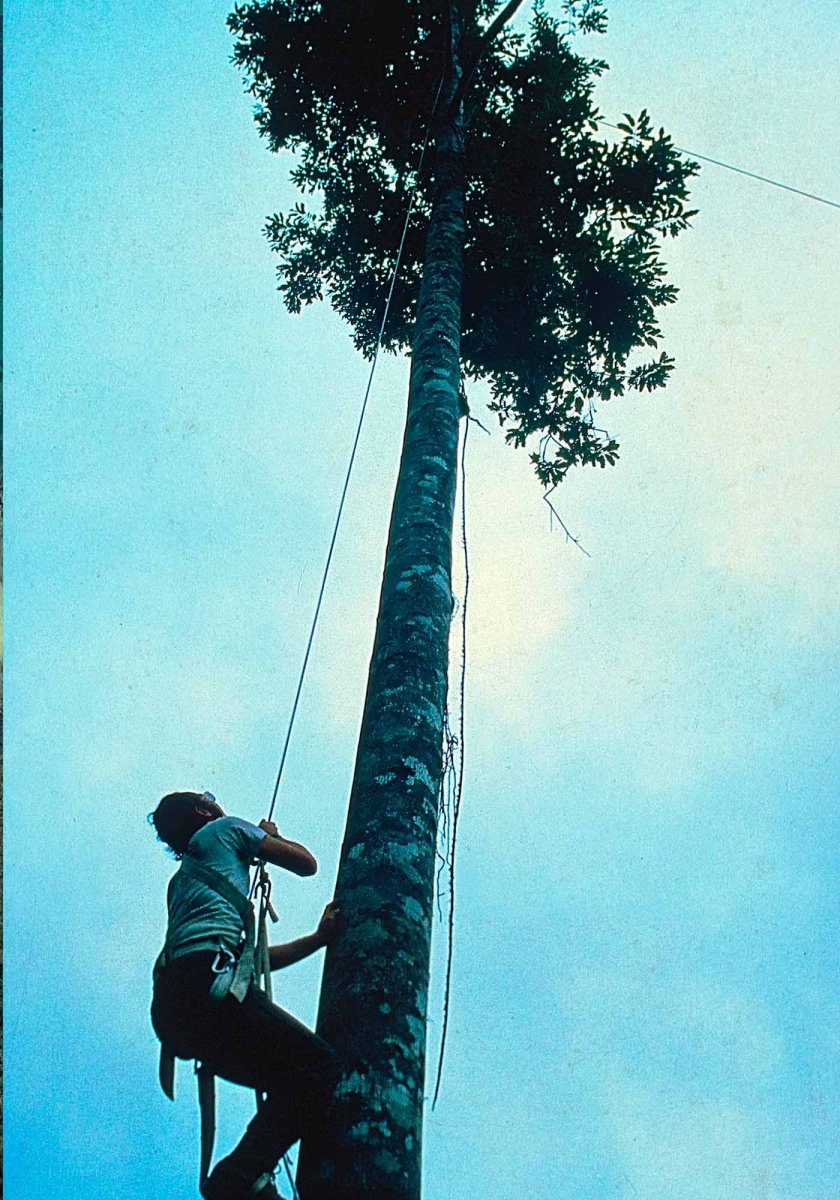
Once I had showed this, the tree climbers just said it was too slow, and they started climbing themselves using local techniques.
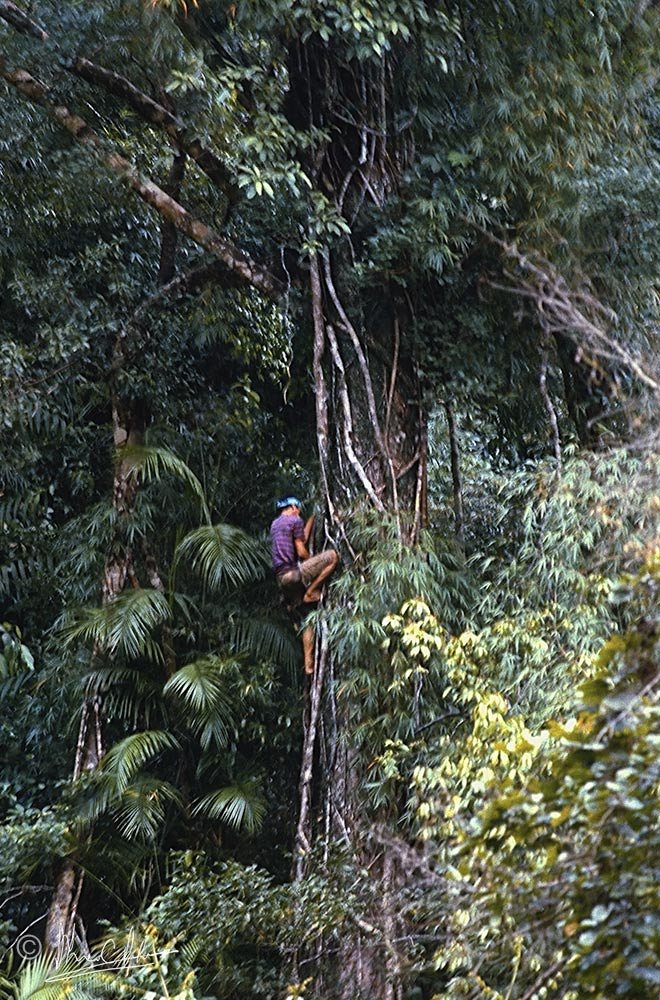
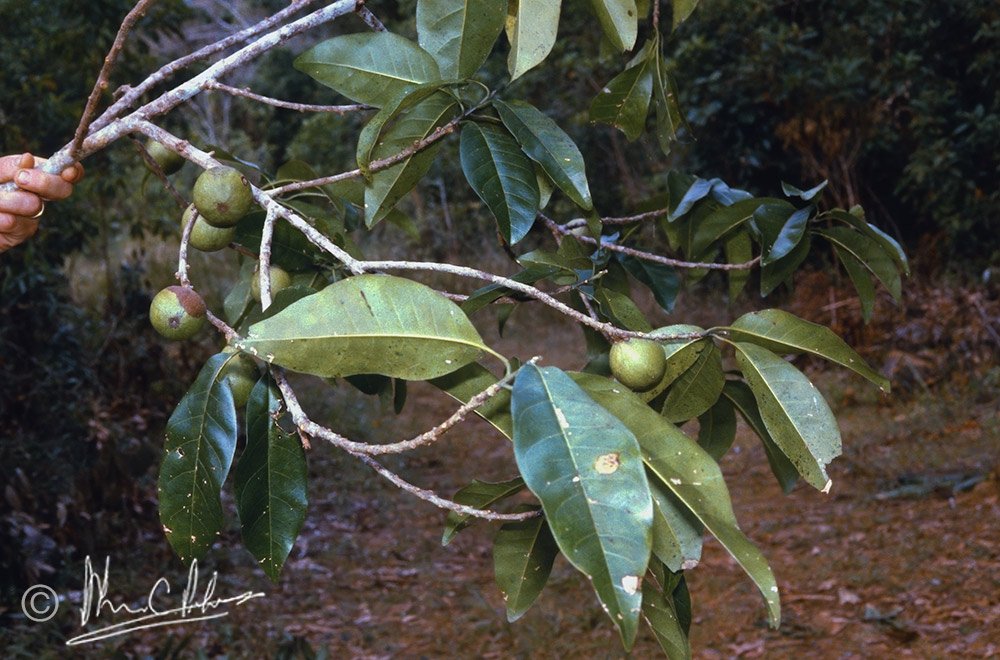
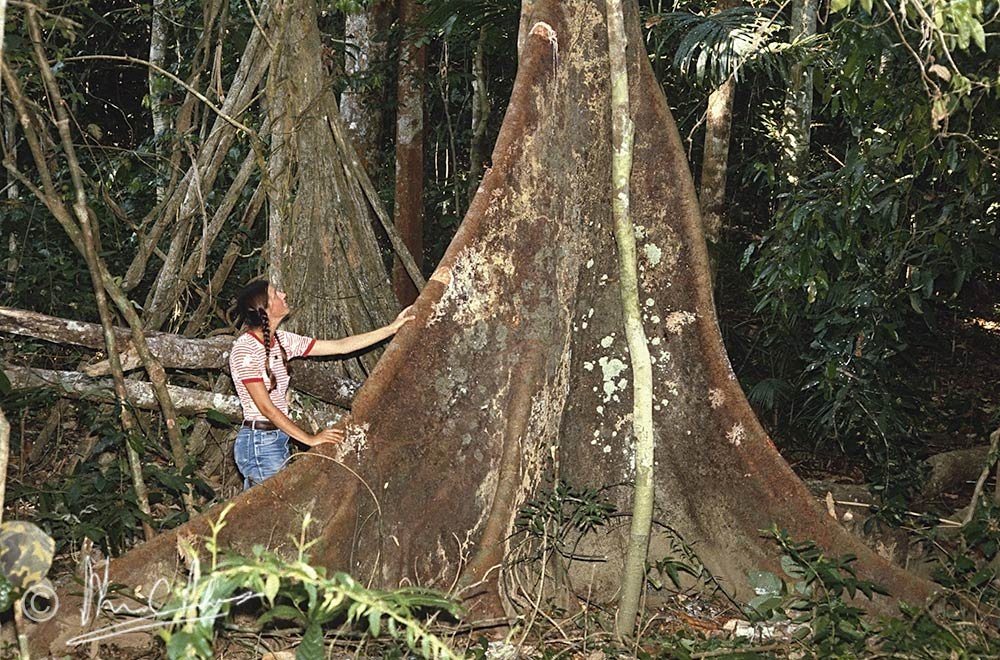
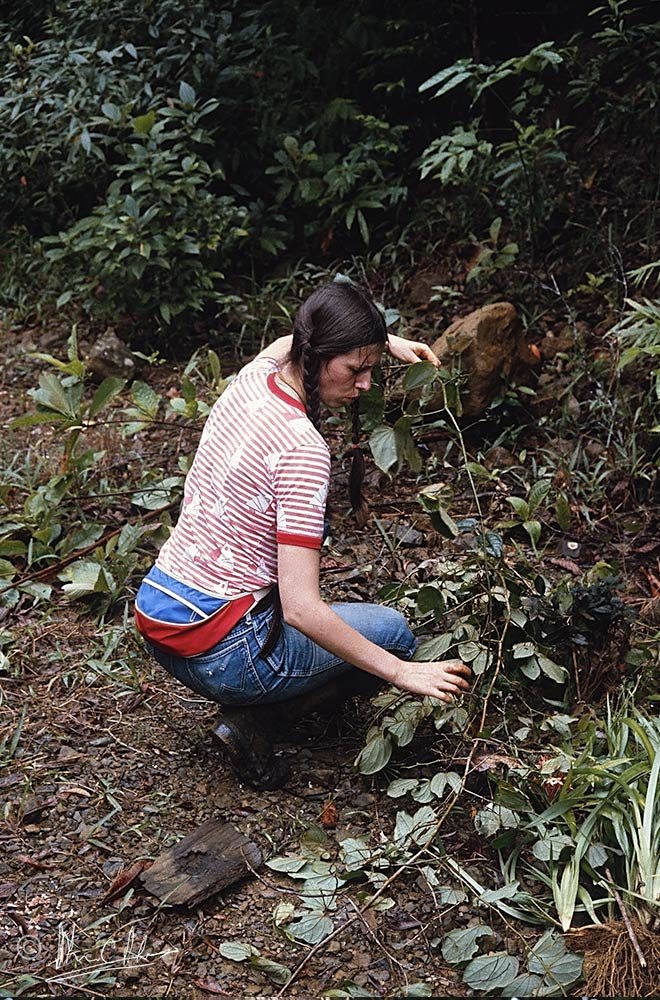
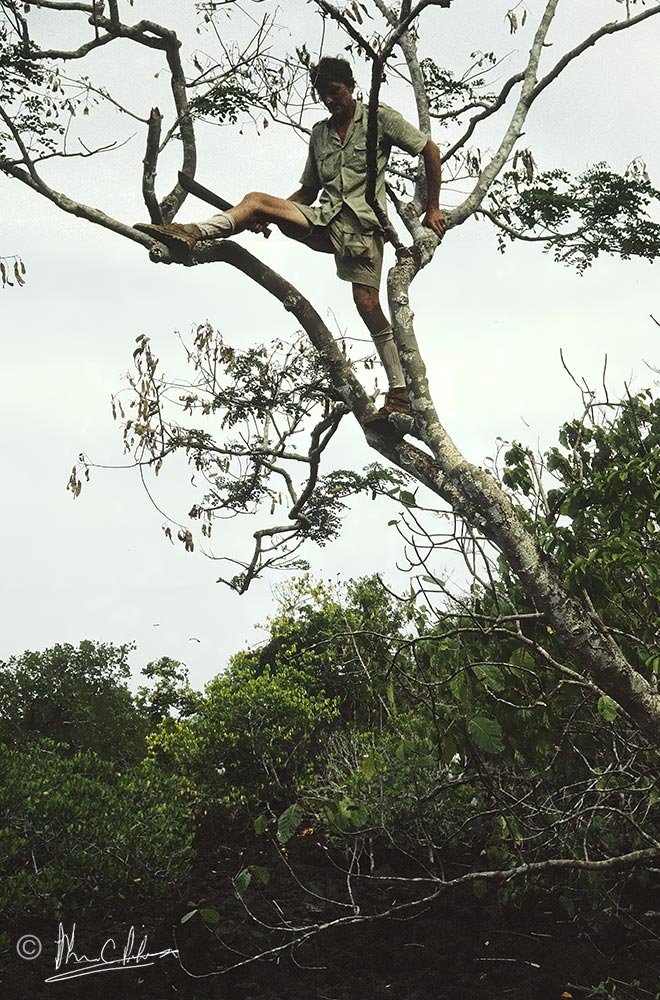
Fruits or flowers with branches were either brought down or thrown down from the crowns. While the tree-climbers were in the tree crowns they would look for other flowering trees, lianas or other plants in flower. They would go from tree crown to tree crown by walking along the large lianas in the canopy. As an incentive to look for additional material in the canopy the tree-climbers were given a bonus for every new specimen they found.
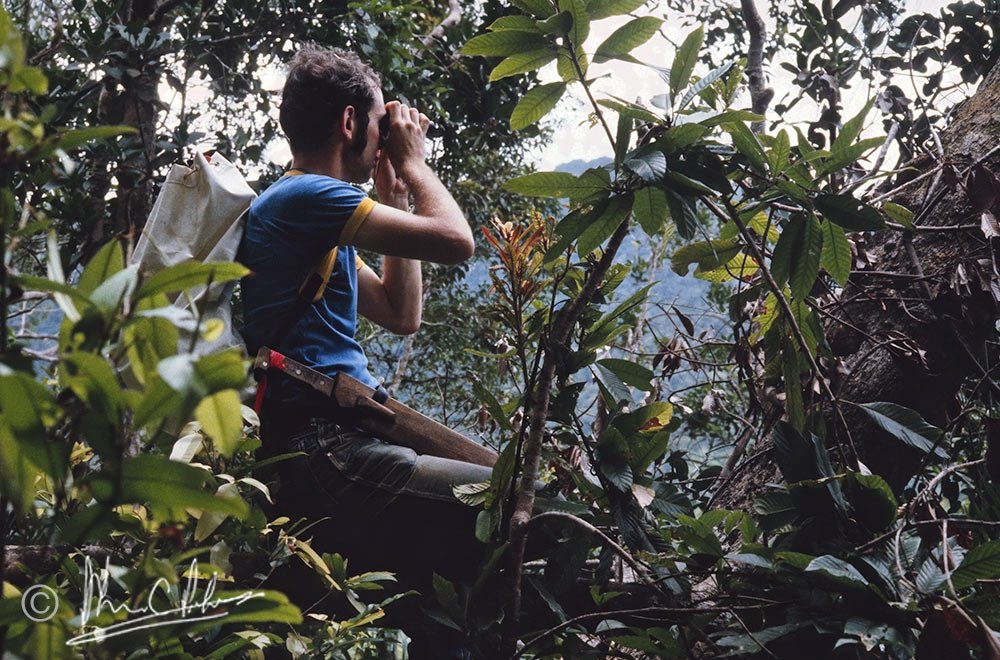
Powerful binoculars were very useful for finding trees that should be climbed. Occasionally Colin would take collecting into his own hands!
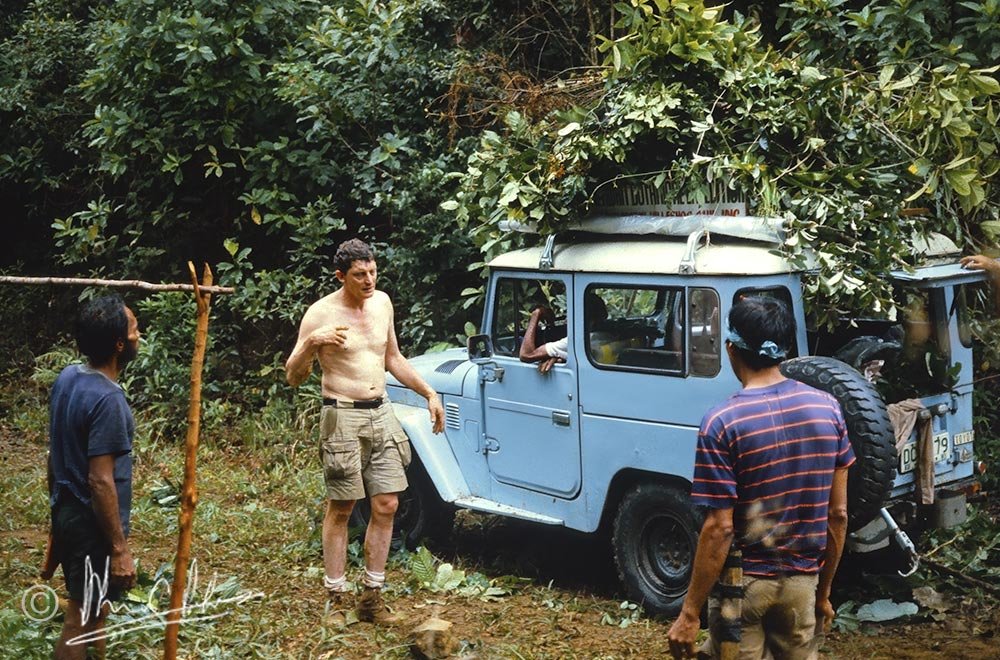
As the specimens came down, they were labelled with tie-on numbered labels and bundled individually. Field notes on the specimens were made on forms for plants and a separate one for wood and lianas (unfilled forms can be seen on the right). All specimens collected during the day were then brought to the 4-wheeler where possible and loaded onto the roof.
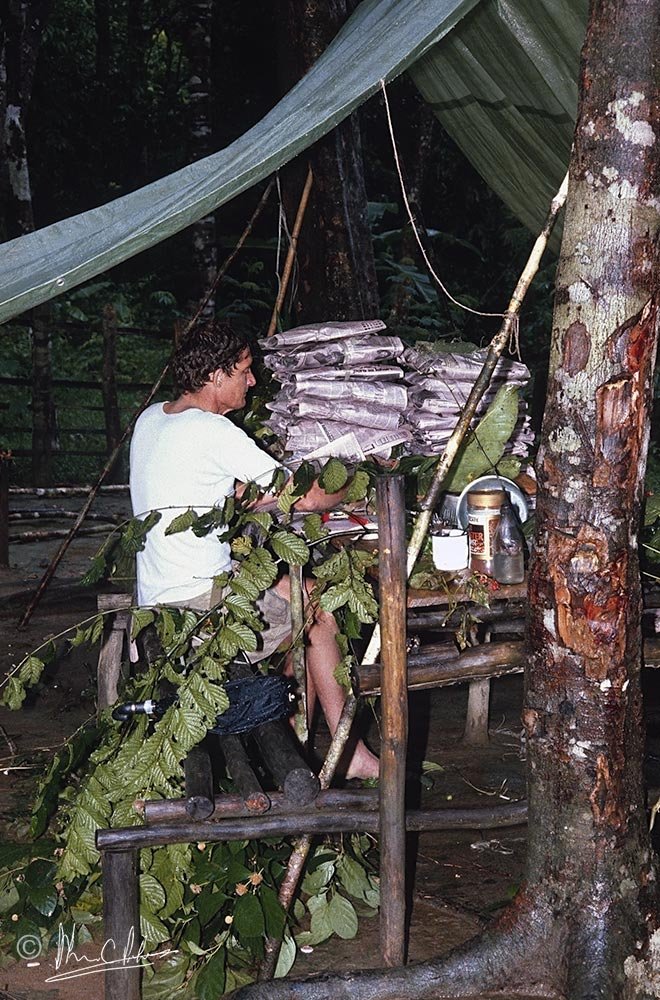
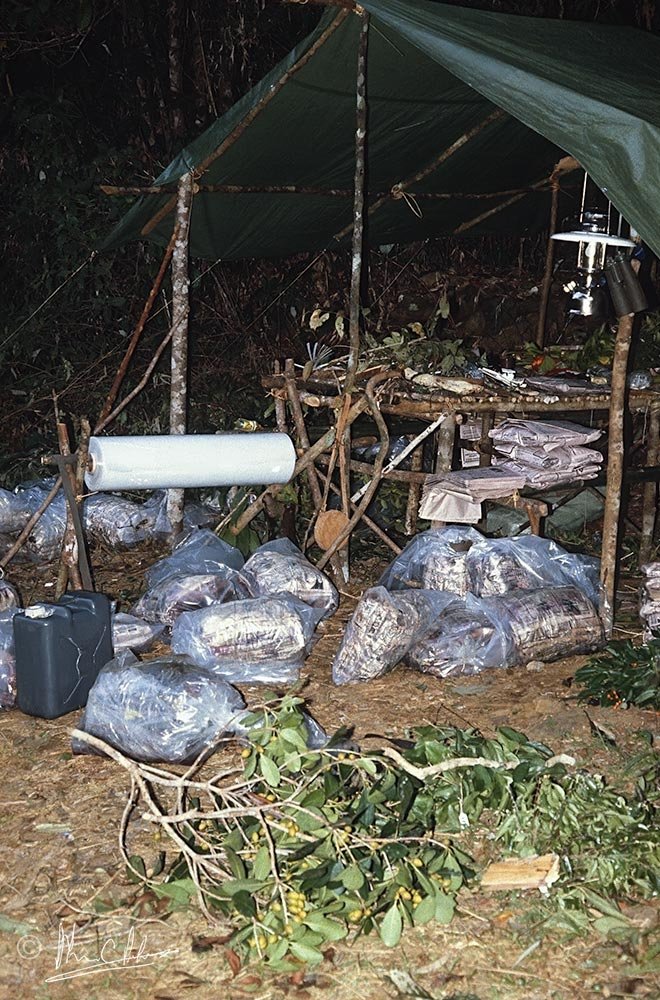
Back at the base-camps, specimens were sorted into piles and processed one by one.
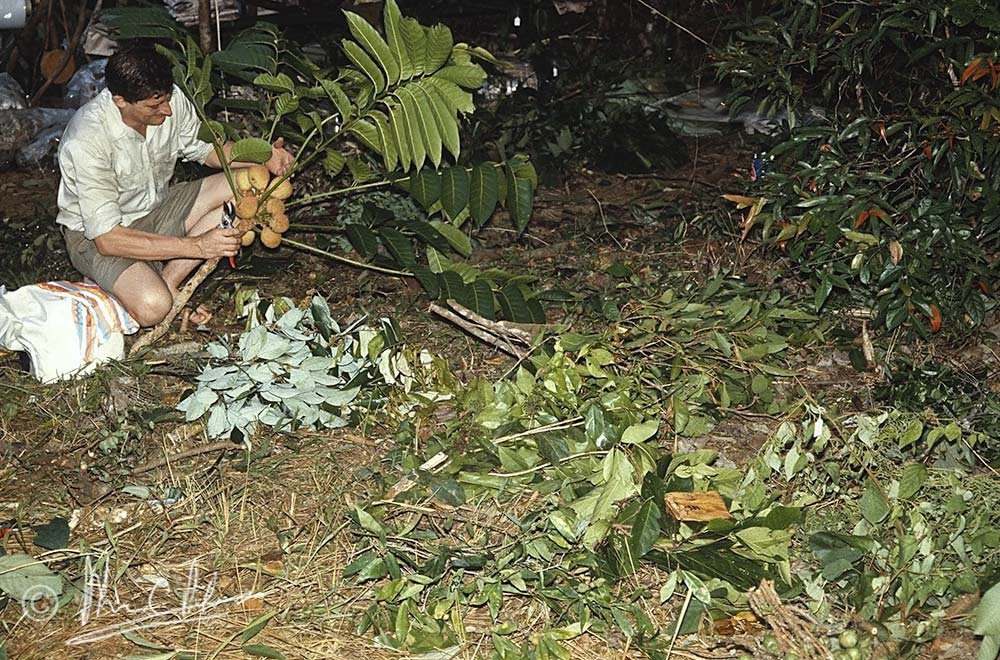
The material was cut into pieces with flowers or fruits, all labelled, and packed in a newspaper package which was tied up and also labelled. Any over late fruits were labelled and preserved in alcohol in jars.
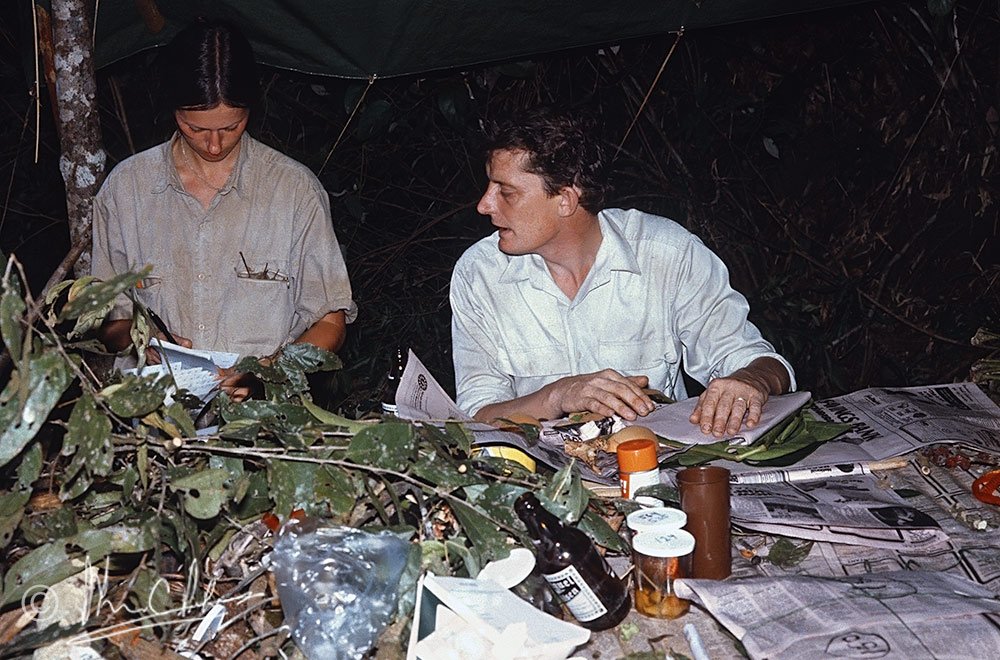
The packages were then very, very tightly packed in strong polythene bags and just enough methanol poured over them to make them wet but not "swimming" in methanol. This very tight packaging was essential to stop the material rubbing together in transport. The plastic bags were then sealed and once again tied tightly in copra sacks which were then sown closed.
Colin brought all these techniques to the expedition from his work in previous expeditions. This process had become standard in the Riksherbarium when working in rainforests.