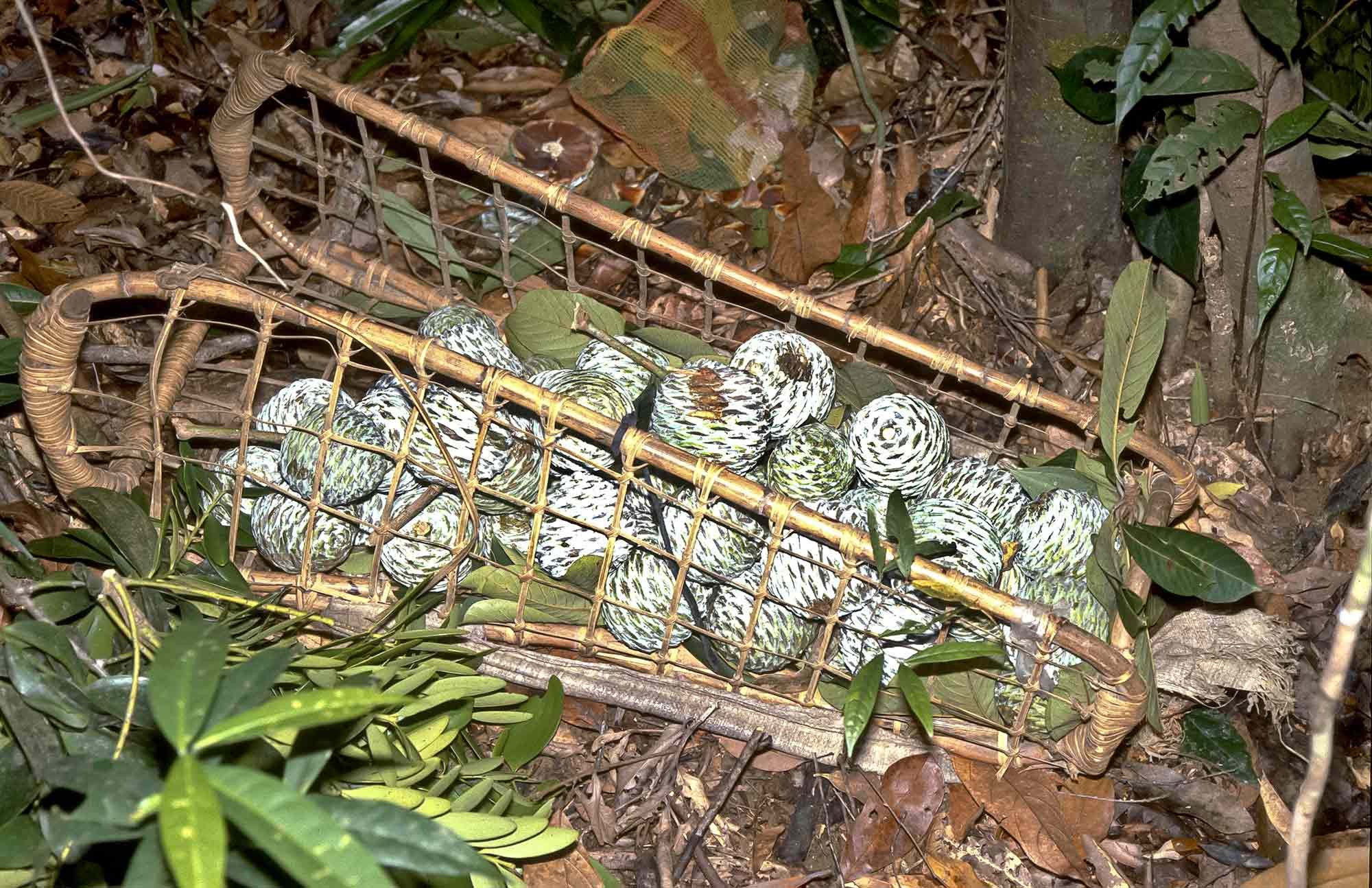
Irawan Valley
A wide range of forest types, often in close association, were seen in this relatively small area. Marked differences were observed between the east and west sides of the main NW - SE mountain chain. A correlation with the rain-bearing south-west monsoon winds is likely. Differences were also found between north and south slopes and above and below c. 400 m in the Irawan R. valley. In the last respect it is significant that during our stay in the Irawan R. Valley (dry season) the cloud layer descended to 400 - 500 m at night. The extent of exposed rock varied between vegetation types. All rock, gravels and sands on the western and south side of the valley were very dark, which together with geological data, indicates a high heavy-metal content. Schists and slates occurred in the north and on the eastern side of the valley however.
Semi-deciduous forest
Growing on steep slopes with a topsoil only a few centimetres thick, the leaf litter was so scant that soil was exposed between leaves. The forest floor was very open with widely spaced emergent trees reaching 30 - 35 m. A remnant patch of this forest type which probably was once widespread on the coastal plain, was seen at locality 5 . Pterocymbium tinctorium, Pterospermum diversifolium, Hymenodictyon sp. and Garuga floribunda were the commonest emergents and were just coming into leaf at the time of collection. Prunus grisea var. grisea and an Approsa sp. also occurred as large trees. Subcanopy trees are listed in table 1. Lianas were very common, while ferns, epiphytes and terrestrial herbs were rare.
Riverine forests.
Small patches (fig. 6, locality 3) occur on alluvial deposits immediately beside the river. A gradation occurs into the valley floor forest, but the remaining areas are so fragmentary that it is difficult to judge whether or not this is a truly distinct vegetation type. Tree seedlings, lianas and sedges formed a thin undergrowth. At the forest edge Cratoxylon cochinchinensis, Syzygium sp.,
Homonoia sp., Cebera manghas and Ficus sp. colonized gravel-beds in the river while Pandanus sp. occurred occasionally on the riverbanks Forty-four named species of small trees were recorded and the emergents included Alstonia scholaris, Koordersiodendron pinnatum, Gomphandra sp., Ficus pellucida-punctata, F. pisifera, F. uniglandulosa, F. variegata and Sterculia cf. comosa. See table 2 for details.
Valley floor forest
This forest type occurred away from the river banks on slightly higher ground, often in association with some exposed rock (localities 1 &11). It may represent a transition zone between steep slope forest and riverine forest. A thin leaf litter was on the forest floor and a sparse herb cover was present.
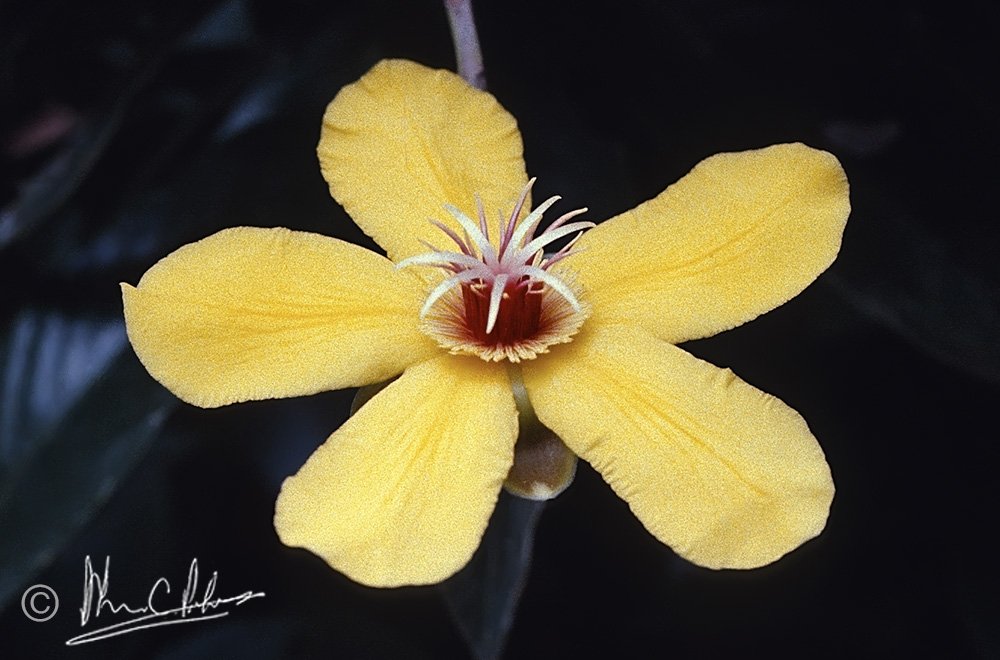
Lianas were abundant with Artabotrys suaveolens, Derris cuneifolia, Armodendron elegans and Kadsura sp. as the commonest large species.
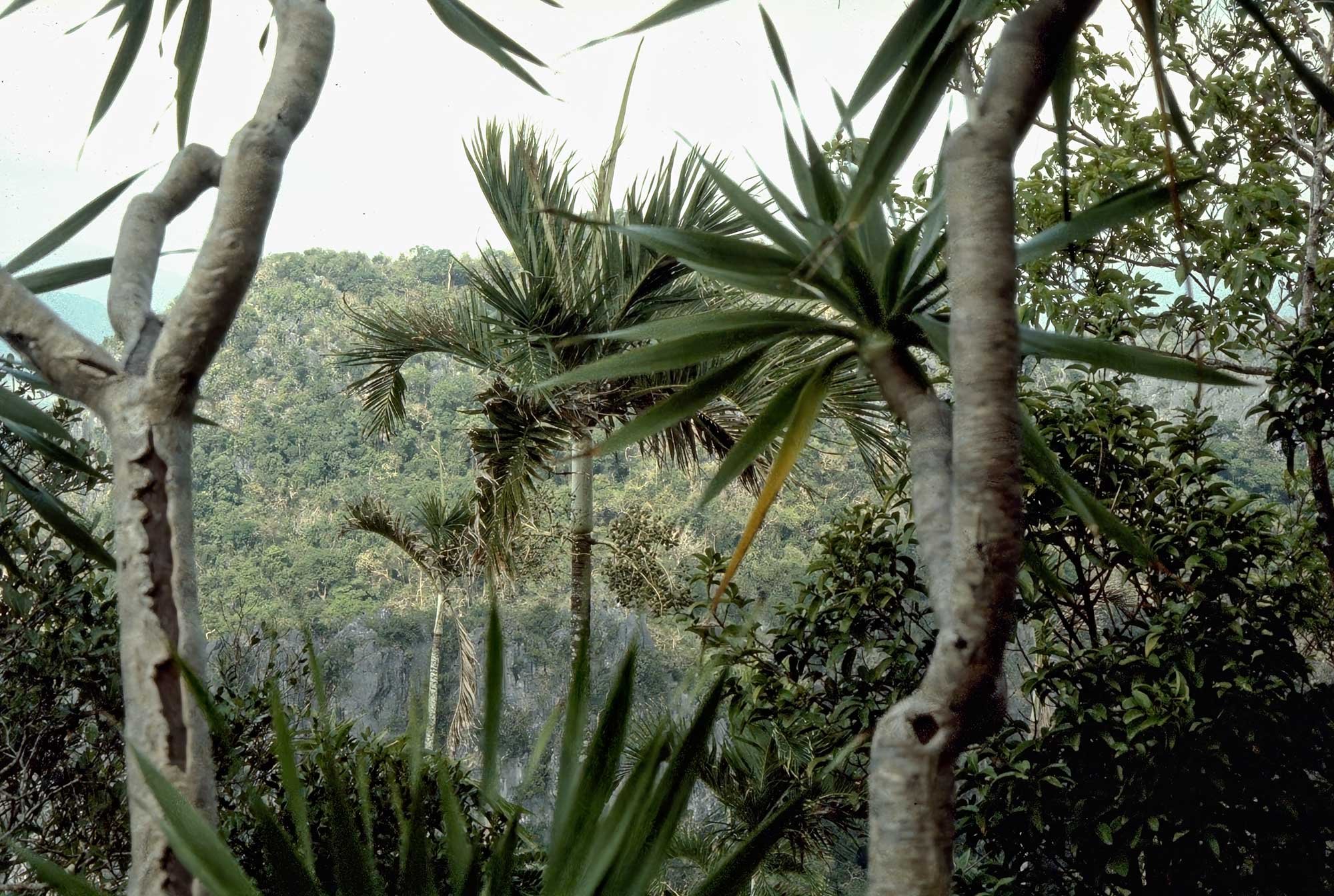
Rattans were also common, though normally occurring on slight slopes. Calamus was represented by about 7 species, Daemonorops by two and Korthalsia and Plectocomia by one each. The palms Orania paraguanensis and Pinanga cf. maculata were patchily abundant in the understory. A fairly shrubby layer was composed of Strophanthus caudatus, Tabernaemontana sp., Litsea sp., Phyllanthus sp., Ficus bataanensis, F. benjamina, F. chrysolepis subsp. chrysolepis, F. pustulata, Fi. recurva var. pedicellata, Syzygium sp. 5 and Psychotria sp. Both epiphytes and lithophytes were common and were dominated by orchids and ferns.
An extremely diverse tree flora was found with seventy-seven named species representing forty-three families collected (Table 3). Of interest is that Alstonia angustiloba, A. macrophylla and A. scholaris were sympatric, growing within a few hundred meters of each other. Although not reaching a great diameter, these trees had tall, straight boles and emergent crowns. Twelve other species of large diameter emergent tree were collected. It is remarkable that three of these, Palaquium dubardii, Pouteria sp. b and Kibatalia are new records to Palawan, the latter being a new genus record. Through comparison with other localities, it appears that Palaquium dubardii prefers well drained localities above the areas liable to flooding. Carallia brachiata, Canarium asperum var. asperum, Terminalia sp., Kokoona ochracea and Syzygium spp. were the other dominant emergents.