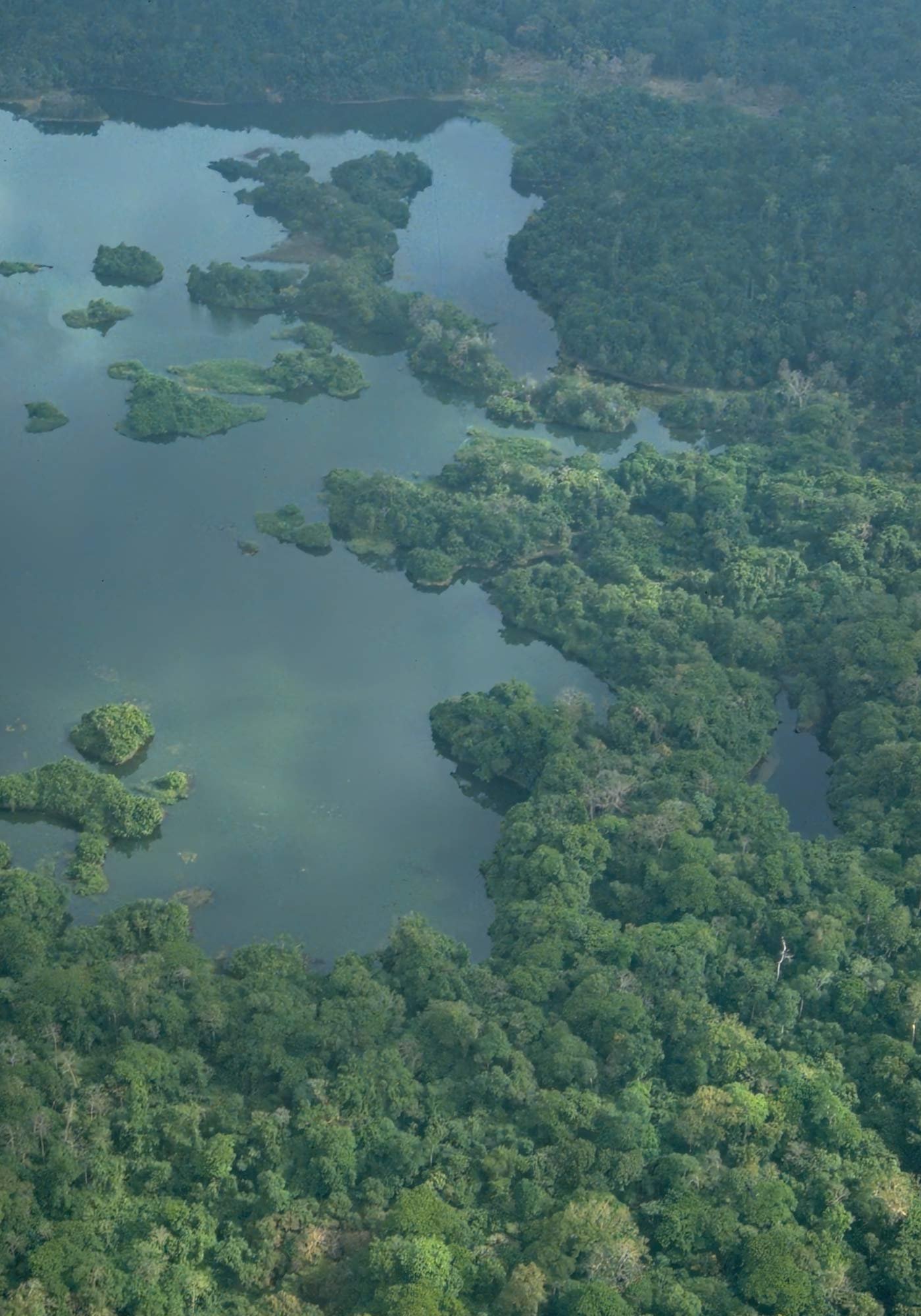
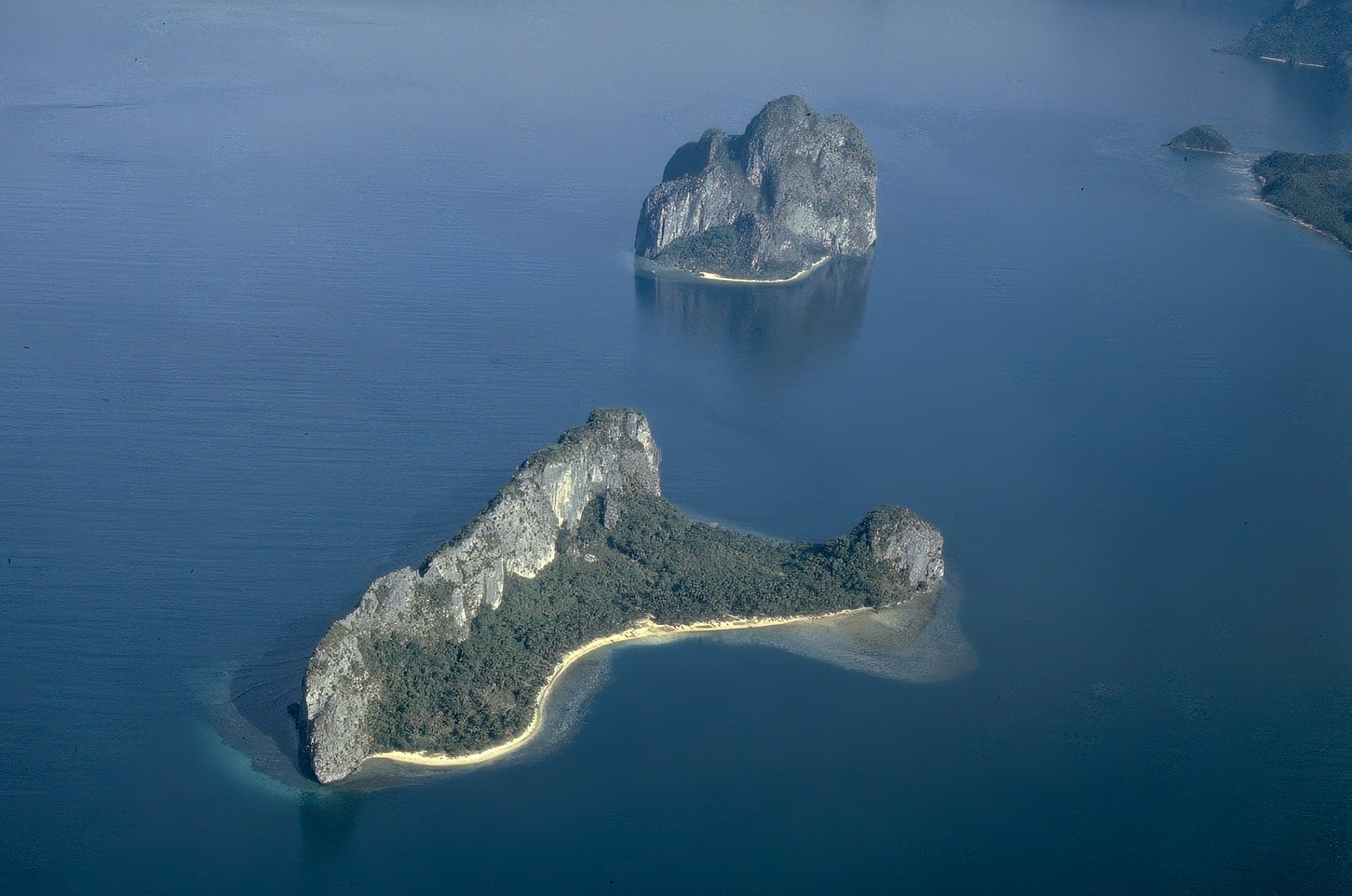
Palawan's only lake lies on a reef limestone lens overlying a submarine andesite or basalt flow which surfaces some kilometres south of the lake. Although the surrounding hills support a dry limestone vegetation, luxuriant forest growth is found on the flood-plain to the south and around the lake's feeder rivers.
The Lake
The aquatic community (fig. 10, locality 14) was dominated by Ceratophyllum sp., Nitella sp. and Nymphaea sp. all of which grew together in the bays. A Polygonum sp. trailed over this community's surface, while the shrub Sesbania javanica formed dense floating tangles. In bays where normally flooded land was exposed, swards of Cyperus sp. and Eleocharis sp. had developed. The rare grass Pseudoraphis spinescens and also Ischaemum glaucescens grew out from the lake margin into the water. Further details are given in table 17.
Lake margin forest
The characteristic lakeside (fig. 10, locality 14) was typified by Barringtonia cf. revoluta, B. racemosa, Syzygium cf. longiflorum, Fagraea fragrans, Memecylon sp., Cerbera manghas, Cynometra ramiflora and Ficus microcarpa plus a large unidentified banyan fig. A Licuala sp. grew in patches within the forest. Only two large lianas, Derris elliptica and a Hoya sp. were common along the lakeside. Further details are given in table 17.
Dry limestone forest
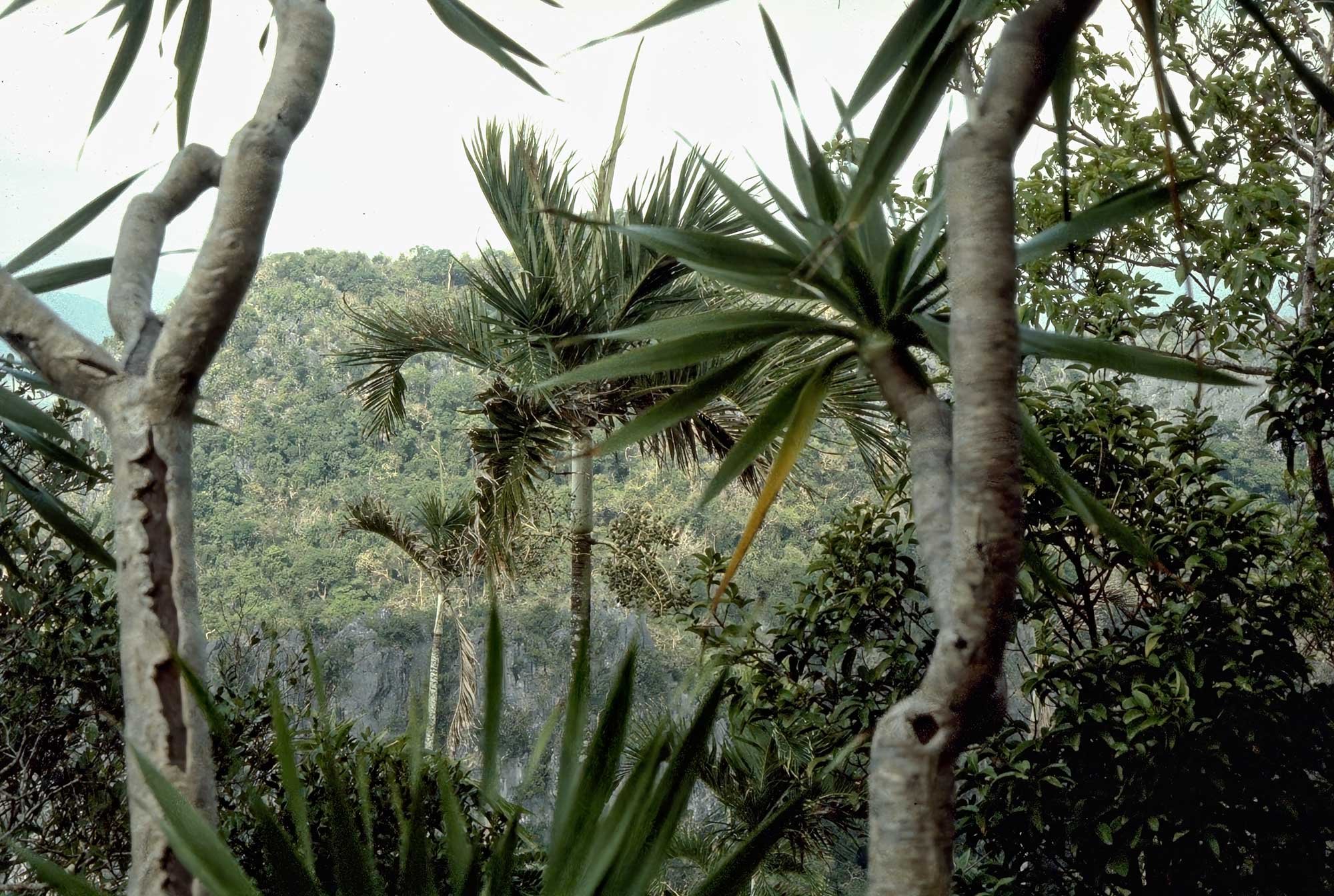
The limestone vegetation (fig. 10, locality 15) was dense with a canopy at 5 - 10 m. Large-diameter trees were recorded for Kayea sp., Mesua sp., Gomphandra luzonensis and Aglaia sp.. Fourteen additional small trees, three shrubs and ten liana species were also collected. See table 17 for further details.
Stream-valley forest
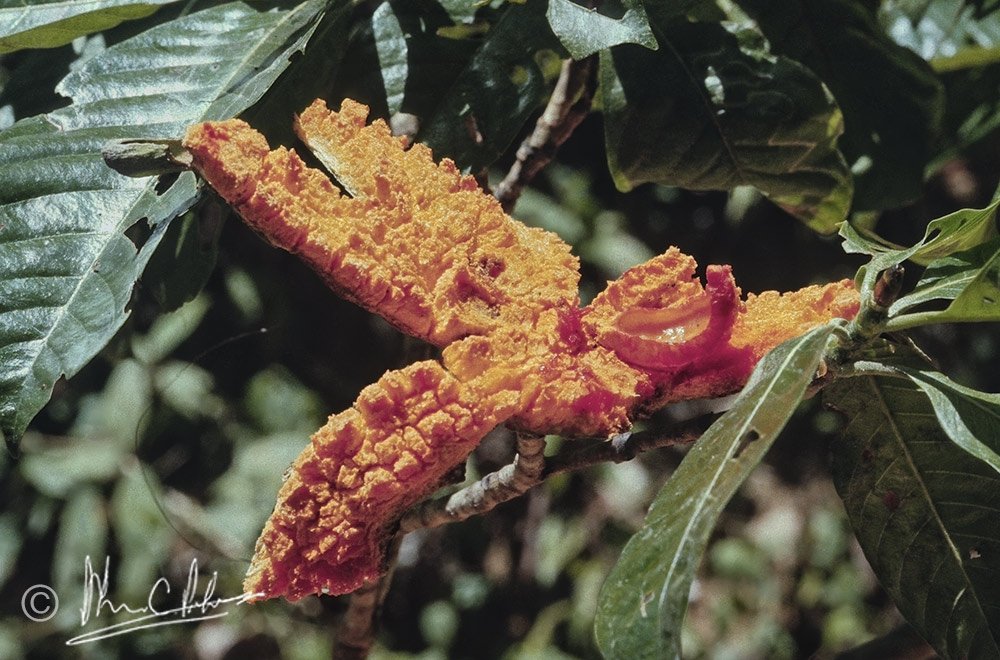
Relatively large patches of this species-rich forest were found on either side of the road leading to Lake Manguao (fig. 10, locality 16). With emergent trees reaching 30 m, this was the only forest type seen with emergent palms (Orania sp.). The Fabaceae dominated the emergent community with six species out of the fifteen recorded (e.g. Pterocarpus indicus (plate 15), Albizia acle, Parkia speciosa and Intsia palembanica). Intsia palembanica represents a major discovery as this valuable giant emergent, widespread over north Palawan, has never before been recorded in the Philippines. Intsia tended to prefer the valley sides and hill-tops, while Pterocarpus grew largest beside streams. A number of figs characterised the area as well: Ficus caulocarpa, F. parietalis, F. punctata, F. recurva var. recurva, F. ruficaulis, F. variegata.
 Koordersiodendron pinnatum
Cananga odorata and Alstonia angustiloba were also important emergents. This species-rich forest included about 48 additional tree species and twenty-one species of liana (table 18).
The streambed community was of note as it contained apart from Barringtonia racemosa and Myrmeconauclea strigosa, a Cryptocoryne sp., giving another new genus record for Palawan.
High forest
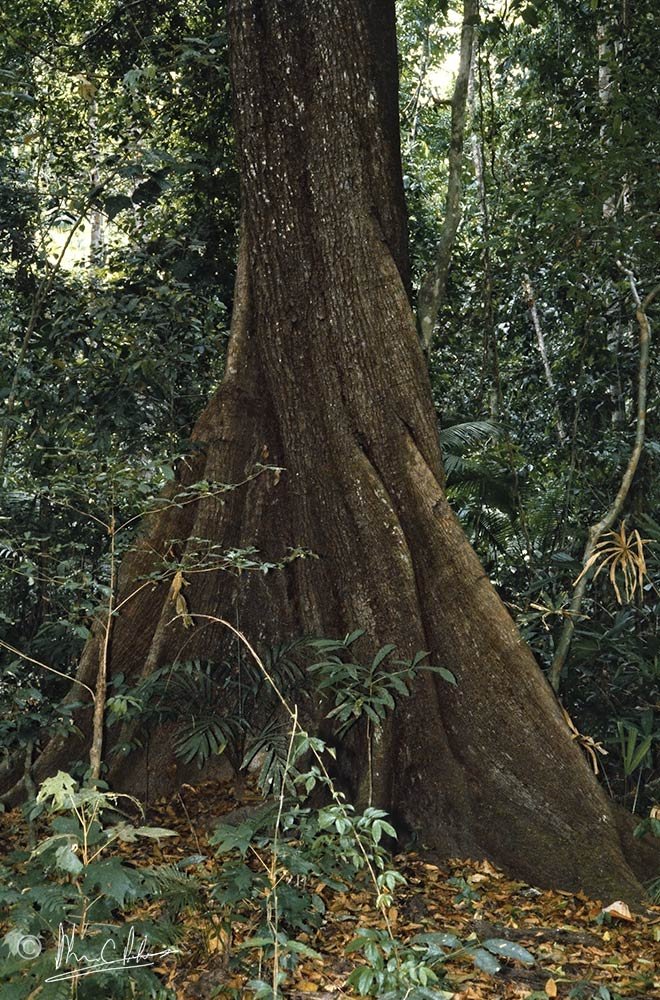
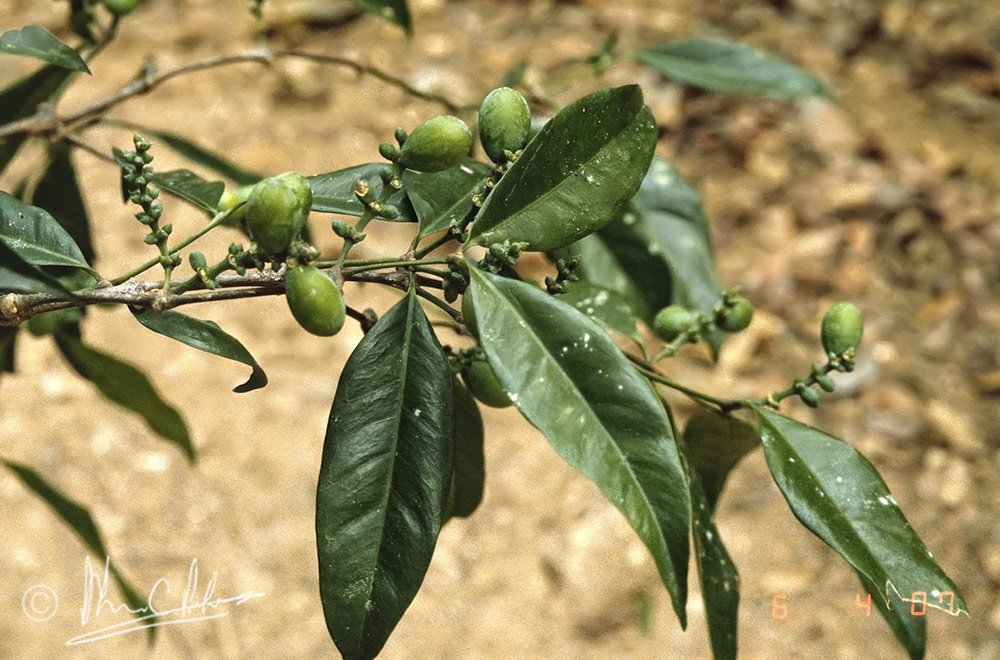
With the emergents Garuga floribunda, Pometia pinnata, Hymenodictyon sp., Kleinhovia sp. and an unidentified Meliaceae towering to c. 40 m with trunks often over 1 m in diameter, this forest (plate 16; fig. 10, locality 18) was only comparable to the St. Paul's Bay coastal forest in stature. A significant discovery here was an unrecorded Citrus sp. (plate 17) which may be of interest for breeding in the citrus industry. See table 19 for further details.
Once again the survival of this forest is in question as large areas are being burnt in the southern part of its range for slash and burn agriculture (kaingins) .