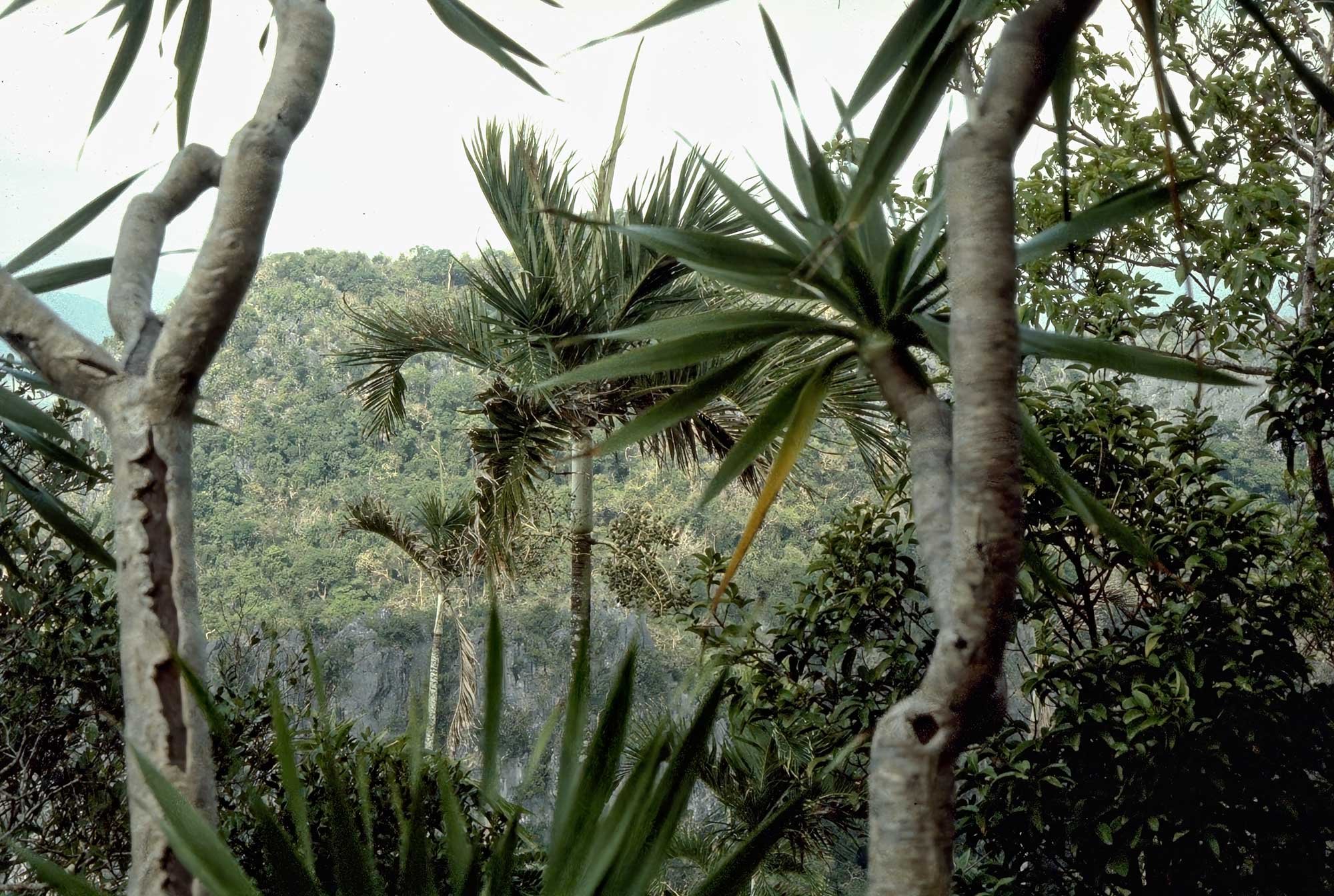
Victoria Peaks
The area visited was within the Trident Mining Company's (non-operational) concession. While much of the forest was badly disturbed or had been cleared, patches of intact forest were found, and above 600 m, the disturbance was restricted to the sides of a single track. The influence of the ultra-basic soils was seen at all altitudes in the wide spacing of the trees and in their reduced height in comparison to other areas.
Lowland forest
Found the edge of the lowland plain (Fig. 14, locality 42) on alluvial fans and on raised ground, Diospyros cf. transita, Ormonsia bancana and Ilex sp. were collected as large trees in addition to the smaller diameter species (table 26). Cycas sp. was sporadically common in the understory.
Middle altitude forest
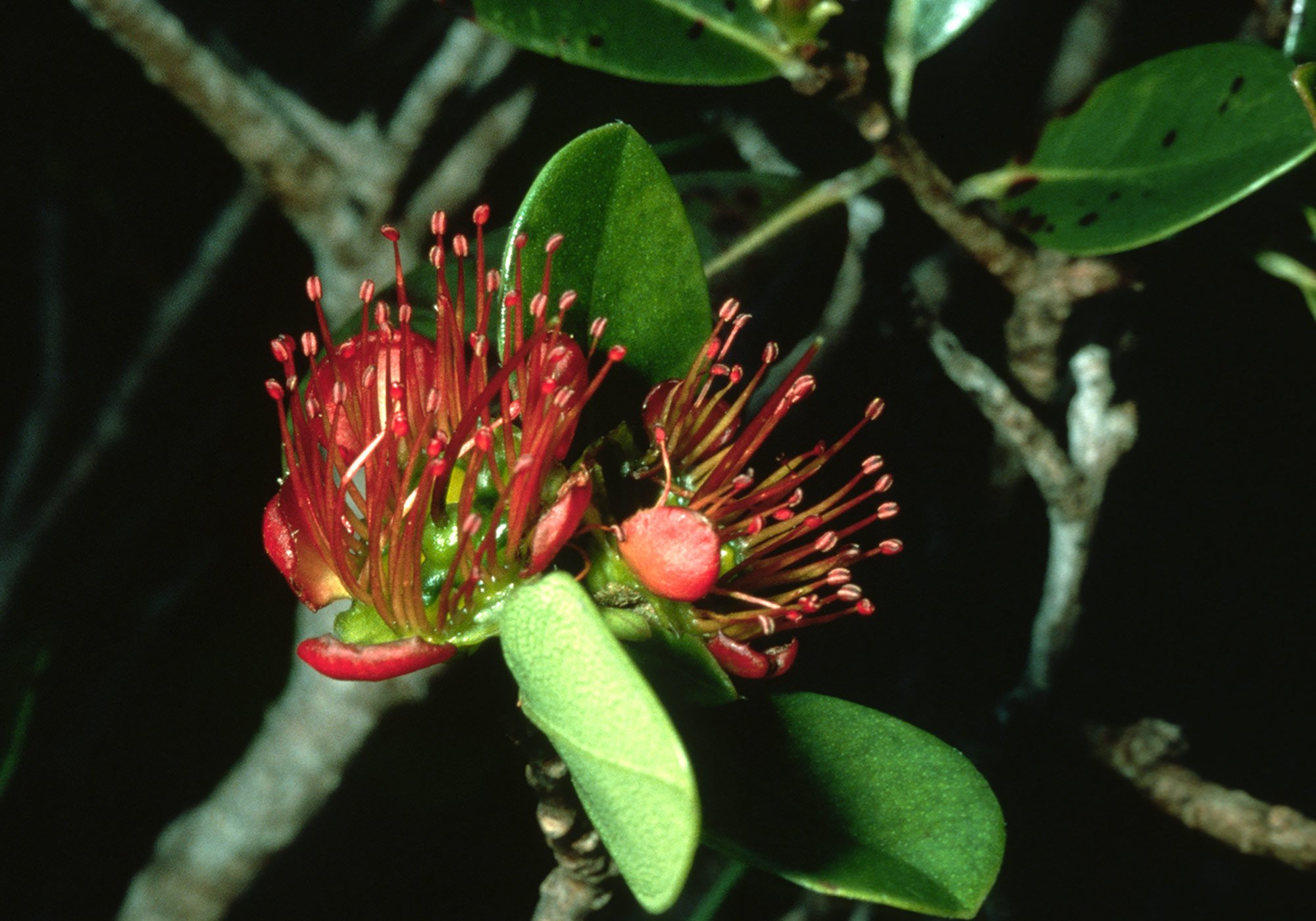
Perhaps the most striking members of this community were the emergents Tristania sp. (plate 24) , Xanthostemon verdugonianus (plate 25) and Casuarina sp. . Exocarpus latifolius with its black trunk and twigs and yellow-green leaves was common. Nepenthes philippinensis grew in festoons, covering both ground and under-growth in many places. This forest (fig. 14, locality 41) was species rich, with eight emergents, sixty-six species of small diameter trees (e.g. the endemic Ficus glareosa) and twenty-one lianas (exclusive of rattans).
Swintonia foxworthyi, various Syzygium sp. and a Litsea sp. were also important emergents. Epiphytes and herbs were relatively uncommon, but one of the terrestrials that was collected, Galeola altissima, was a new island record. It is perhaps significant that Agathis dammara was not seen anywhere in the Victoria Peak area.
Upper montane rainforest
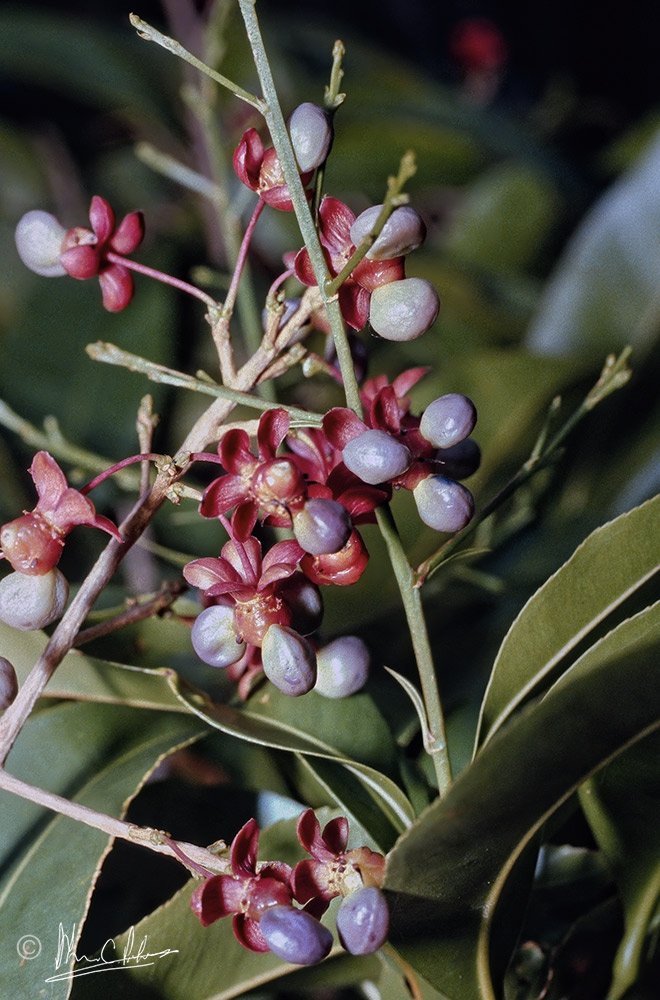
On a narrow ridge at 620 m (fig. 14, locality 43) the forest was much dwarfed, with its canopy at c. 5m. Normally only found on strongly ultrabasic soils, Exocarpus latifolius and the recently described Cinnamomum rupestre were common.
Also common were an unknown Tristania sp., Syzygium punctilimbum and Planchonella firma. Nepenthes philippinensis was again abundant, particularly as a terrestrial. Further along, the ridge changed direction, turning west and broadened from c. 5 m to c. 15 m. The forest canopy rose to 10 - 15 m. Casuarina sp., Tristania sp. and the heavy-metal indicator Vaccinium gitingensis were common. The rare Heliciopsis cf. artocarpoides, a possibly new Cryptostylis sp. and an Apostasia sp. were also found here. Epiphytes were rare, but one orchid, Polystachya flavescens was collected for the first time on Palawan.
Further details are given in table 28.
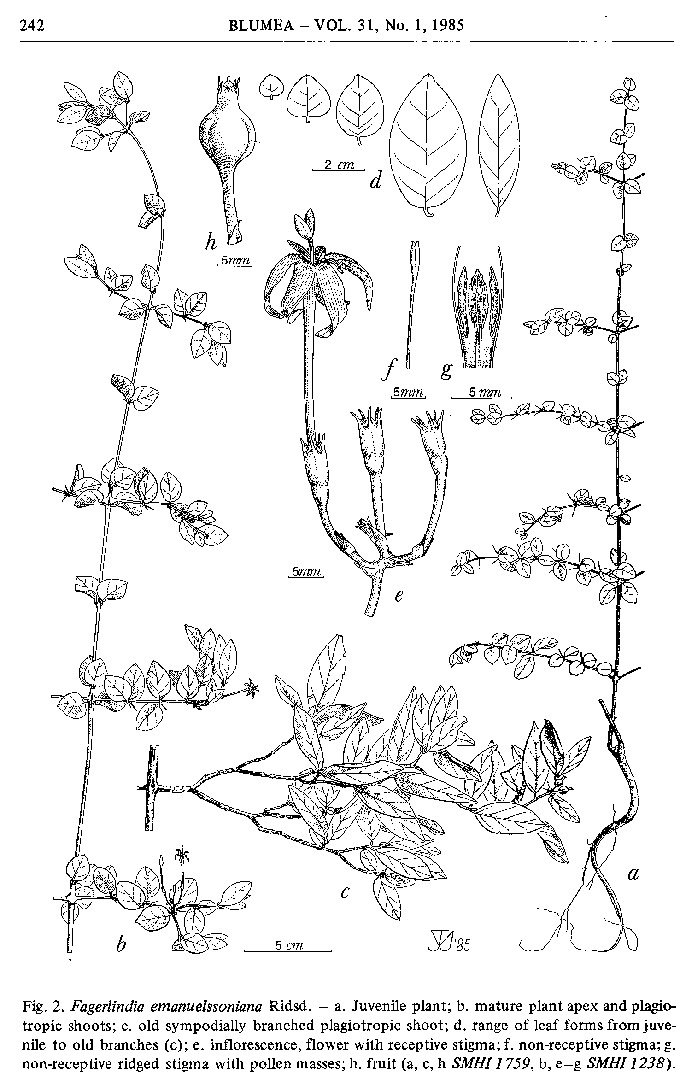
Fagerlindia emanuelsoniana was a species described from the upper montane rainforest on Mt. Victoria and from the upper montane rainforest near Mt. Beaufort.