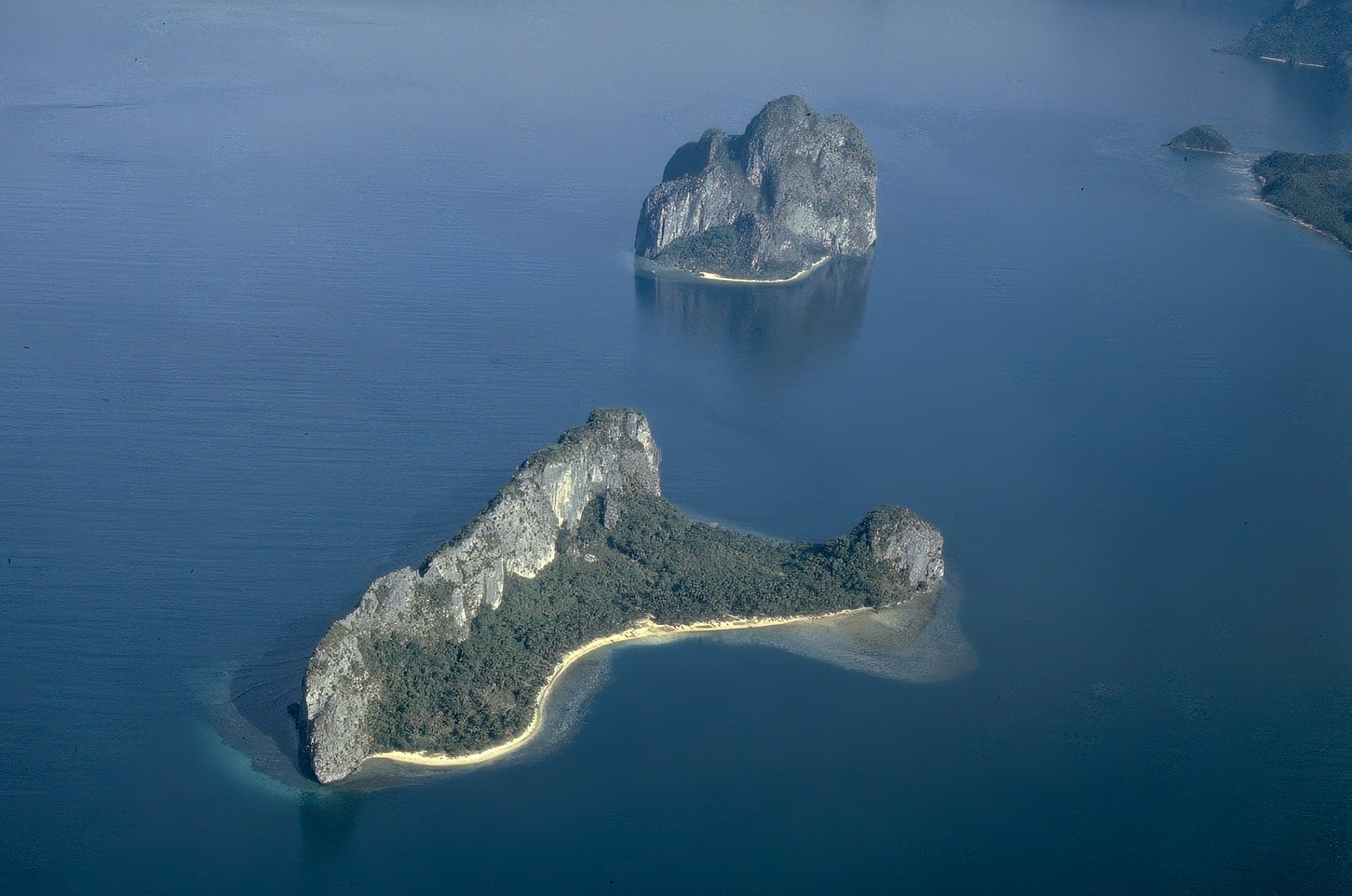
St. Paul's Bay
Forests were well developed and divisible into three broad categories:
- Lowland forest on alluvial deposits and on the karst edges, subject to periodic flooding;
- Karst forest, growing directly on the karst outcrops;
- Coastal forest growing at sea level behind the stand community.
The aerial photographs suggest a fourth karst forest type of well developed high forest in the Bucungan River Valley.
Although mostly within the national Park, these forests have never been botanically explored. Preliminary descriptions can now be made of the first three forest types. Due to operational problems, the species composition of the fourth type remains mostly unknown.
Lowland forest
Often with a 35 m high canopy, this forest (fig.8, localities 30, 32, 38) contained several large emergent tree species e.g. Dracontomelon dao, Swintonia foxworthyi, Atuna racemosa, Diospyros sp., Dysoxylon sp., Horfieldia irya, Nauclea sp. and Pometia pinnata on alluvial soils with Syzygium alcinae, S. sp. 29 and Pometia pinnata on the karst edges. Thirty three other tree species were collected (table 12).
Epiphytes and lithophytes were common. Bulbophyylum macranthum and B. whitfordii at least were new to Palawan. Ten ferns were collected, of which seven were limestone lithophytes.
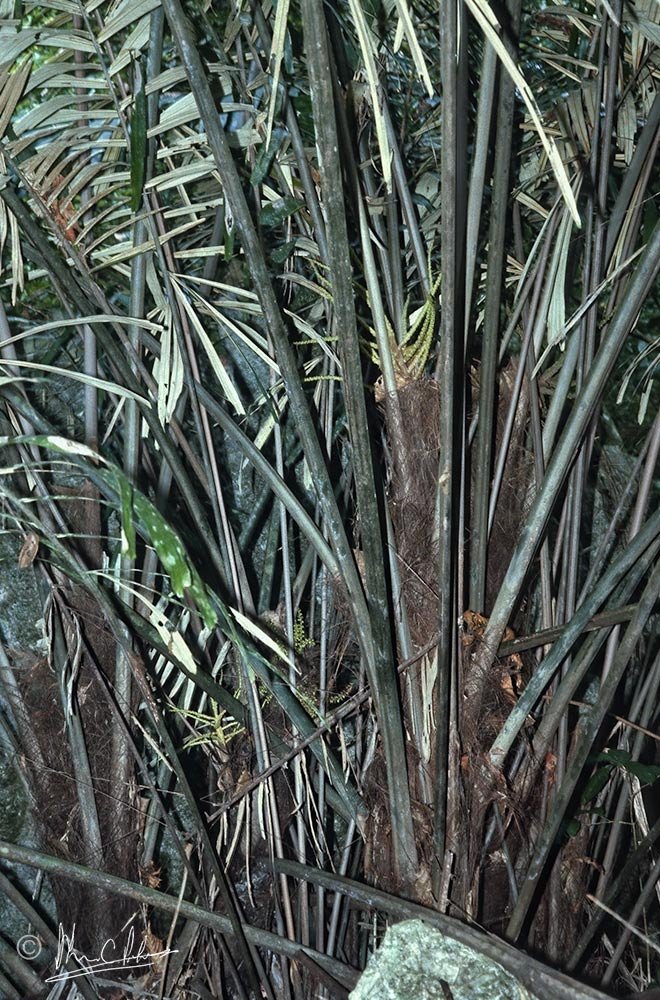
Arenga brevipes was seen for the first time in the Philippines at Lion’s Cave (fig. 8, locality 36) and a total of eleven rattan species were found in the lowland forests.
Karst forest
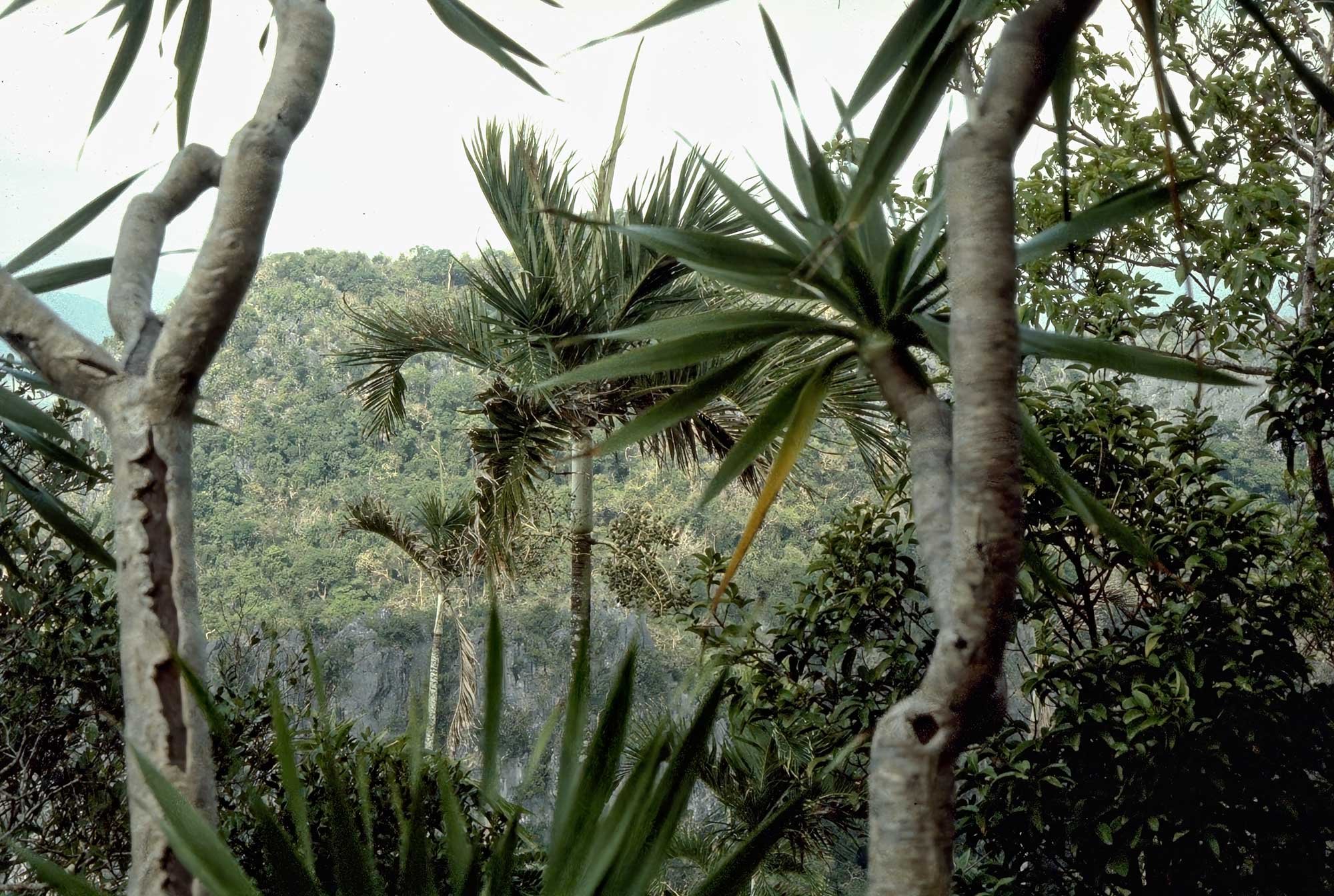
Growing more or less directly on karst limestone, the species we collected (fig. 8, locality 34) were unique to this vegetation type. Leaf litter accumulation many centimeters deep were found in pockets and crevices. Soils were restricted to the less steep slopes and level areas between karst outcrops. Large trees were found both on these thins soils and on bare limestone. Antidesma sp., Drypetes sp., Gomphandra sp., Aglaia sp. argentea group, Sterculia sp. and Pipturus sp. formed the emergent community. Ficus callophylla, F. tinctoria subsp. gibbosa were also collected there.
The largest lianas were Strophanthus sp., Friesodielsiana sp. Uvaria cf. nudistellatus and Champereia manillana.
Although few plants grew as epiphytes, the lithophyte community was rich particularly in orchids and an Impatiens sp.. Exceptionally large specimens of Hydnophytum sp. grew both as lithophytes and epiphtyes.
A large pendant, branched Cycas sp., a Pleiomele sp. and Dinochloe formed the cliff face community. Growing on narrow ledges, the Cycas and Pleiomele reached considerable size and entailing particularly hazardous collecting.
Further details are given in table 13.
Coastal forest
Only two patches of this community totalling not more than 4 ha (fig. 8, locality 37 b, c) were found within the National Park. The strand community was dominated by exceptionally large specimens of Calophyllum inophyllum. At locality 37 b, the massive trees, 80 - 100 cm in diameter at breast height and 35 - 40 m were identified as Pometia pinnata and Palaquium dubardii. See table 14 for further details. Unfortunately the remaining species remain unknown.
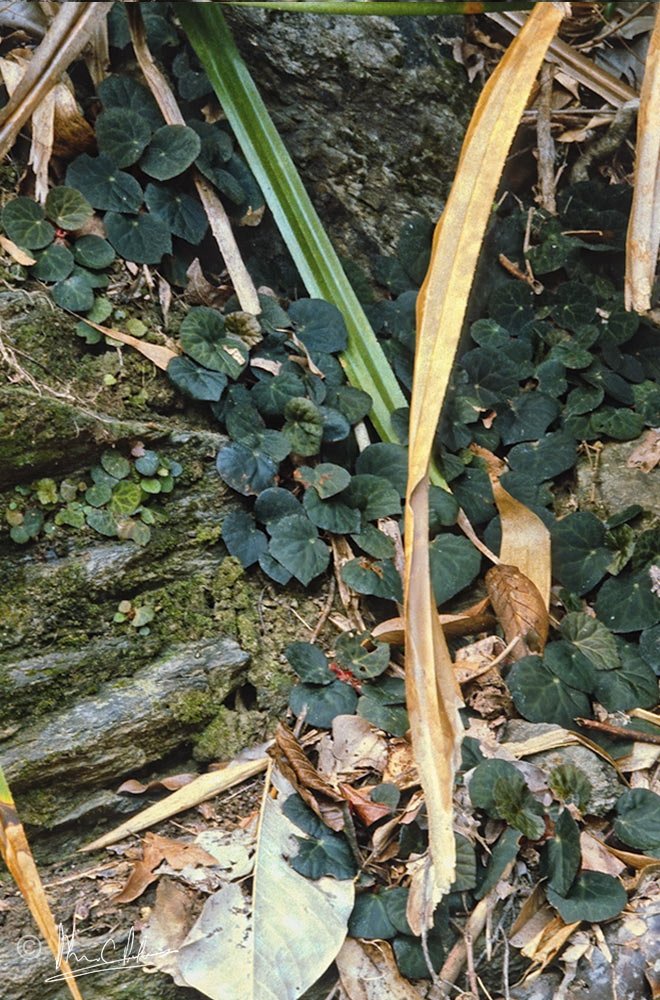
This unique forest type is seriously threatened within the Park as it has been designated a recreation area. Extensive under-brushing has been compounded by replanting with tree seedlings taken from other forest types. Euphorbia trigona and Pleiomele sp. grew on the karst limestone backing onto this coastal forest. A Monophyllaea sp. grew abundantly in dark crevasses.
Two small patches of coastal forest are home to the Tabon Bird.