Upper montane rainforest
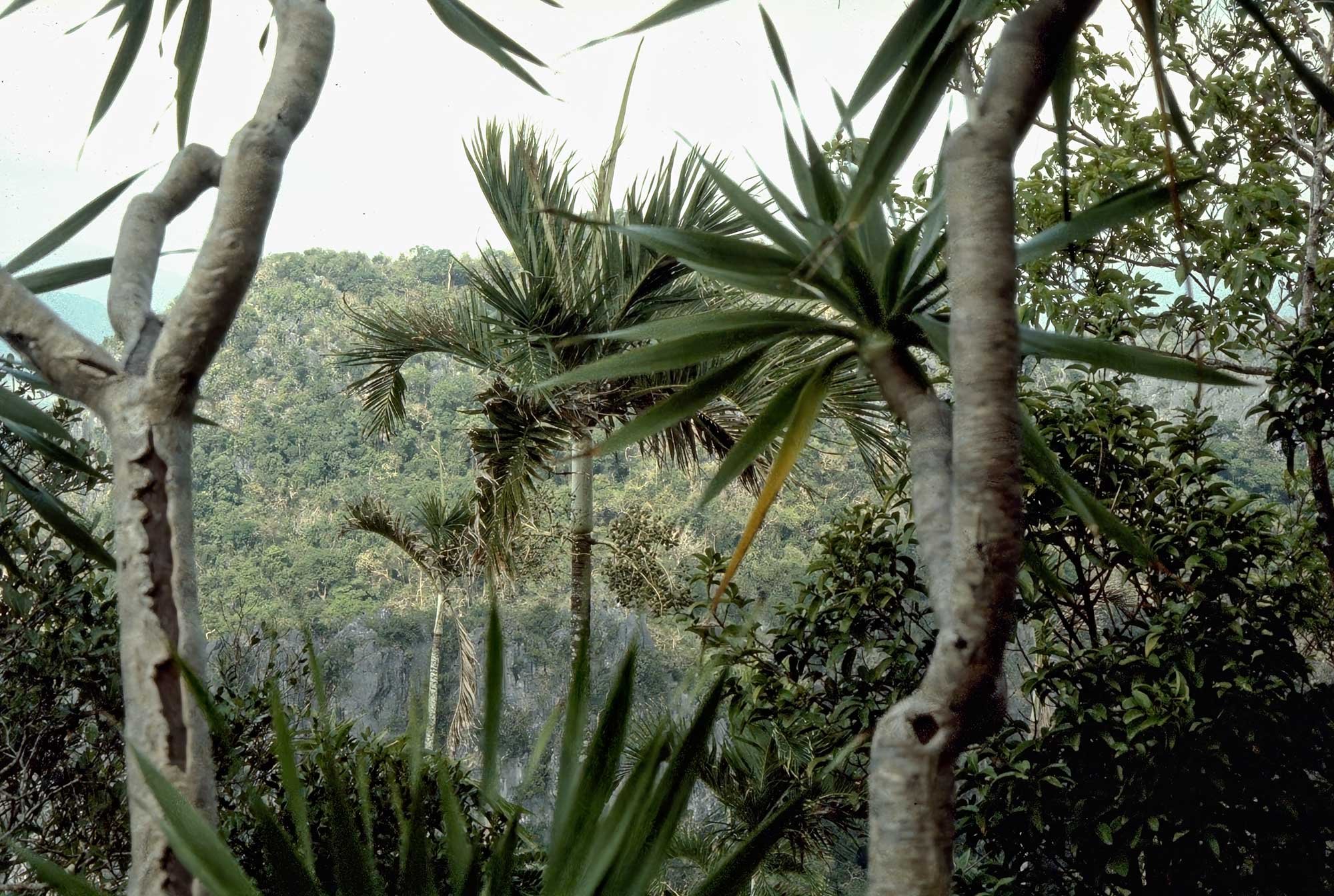
Occurring above 500 m on Mt. Beaufort, this forest type grew on 25 - 36 degree slopes with occasional patches of scree. Similar forest probably occurs on the east face of Thumb Pk.. Mining activities, which ceased in 1980, created severe but rather localized damage mostly on the northern face of the NNW spur and at two restricted locations on the west face of Mt. Beaufort at 600 m. Damage appeared to be restricted to forest removal for roads and at the excavation sites. The numbers of lianas and shrubs at the forest edge was greater than normal, but there was scant evidence of timber removal from the intact forest. Large Gnetum vines were common.
A comparison of the collections made on the northern end (fig. 6, localities 2 of 6) and the west face (fig. 6, locality 10) of Mt. Beaufort reveals many differences. Of the forty-five families recorded, only 13 families were common to both areas. Lianas were uncommon on the west-face. There was a huge difference in the Ficus species found with only Ficus subulata recorded from the northern end and eight species recorded from the west-face: Ficus crassiramea, F. fulva, F. glandulifera, F. glareosa, F. pellucidapunctata, F. punctata, F.satterthwaitei and F. uniglandulosa.
A diverse fern flora including tree-ferns and Angiopteris together with many epiphytes indicated much wetter conditions than on the northern face. A Tristania sp. and Agathis dammara were the dominant emergents, both towering to 35 - 40 m with straight boles clear of branches often to 20 m.
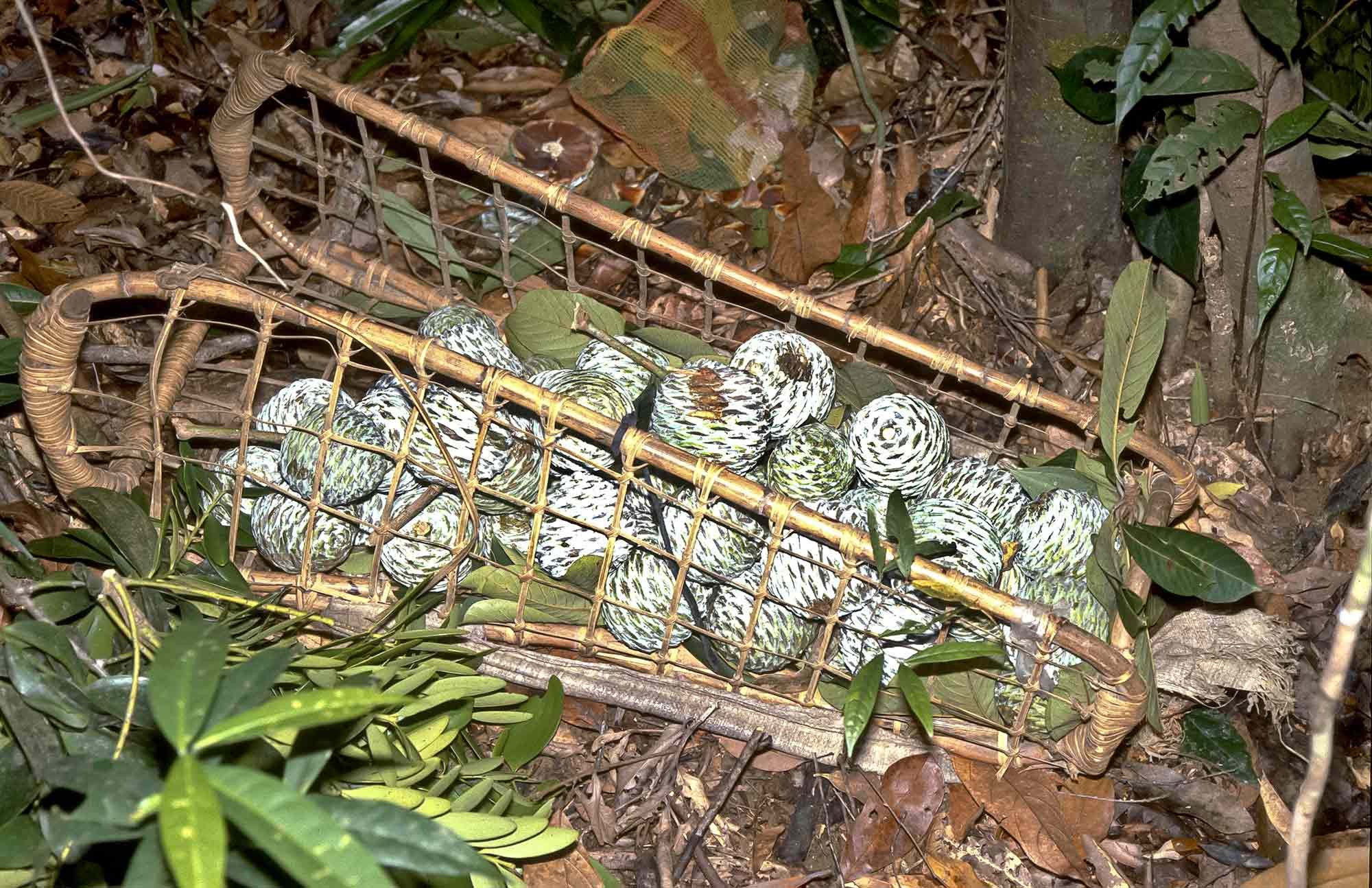
Agathis populations were at their densest between 500 m and 700 m. Although the population structure of this species appeared healthy, its continued survival in the Mt. Beaufort - Thumb Pk. area is seriously in question. Extensive and intensive resin tapping of trees down to 5 cm in diameter at breast height has resulted in not only insect and fungus invasion of the heartwood, but even effective ring-barking. Dying emergent individuals with core rot and fungal fruiting bodies on the trunk (plate 6) were frequently encountered, as were dead specimens without bark. The situation is so acute that Agathis may soon disappear from this area.
A distinct new variety of Knema latericia subsp. latericia has already been described from the north face collections while a Madhuca from the west face may be a new species. Also on the west face, the genus Armodendron was recorded for the first time on Palawan and was represented by the large tree A. elegans. Coelogyne (syn. Chelonistele) sulphurea from the same locality was a new Philippine genus record. See tables 6 and 7 for further details.